Hiking in Slovenia

Insiders' Guide by Slotrips

Slovenia is without a doubt a hiking paradise.

Here, more than 10,000 kilometers of mostly well-maintained and marked hiking trails throughout the country wait for your step. No matter if you are a young adventure seeker, a family with teenagers, or a retired couple whose knees have seen better days – you will love hiking in Slovenia!

This corner of the world, sandwiched between the south-eastern end of the Alps, the Adriatic Sea, and the Pannonian Plain, offers you plenty of hiking pleasures among jagged mountains, turquoise rivers & lakes, lush forests, and wine regions. Showcasing incredible landscape diversity in such a small space. You will hardly find more beautiful spots where you are so close to civilization and at the same time in the wilderness. Near, but far away. In one of the safest countries in the world.

The Julian Alps & the Triglav National Park are probably on top of everyone’s bucket list when planning your hiking trip to Slovenia. You are right, it is a definite highlight! But there is so much more to discover. Keep reading to find out more about hiking in Slovenia – a hiker’s dream on the sunny side of the Alps!

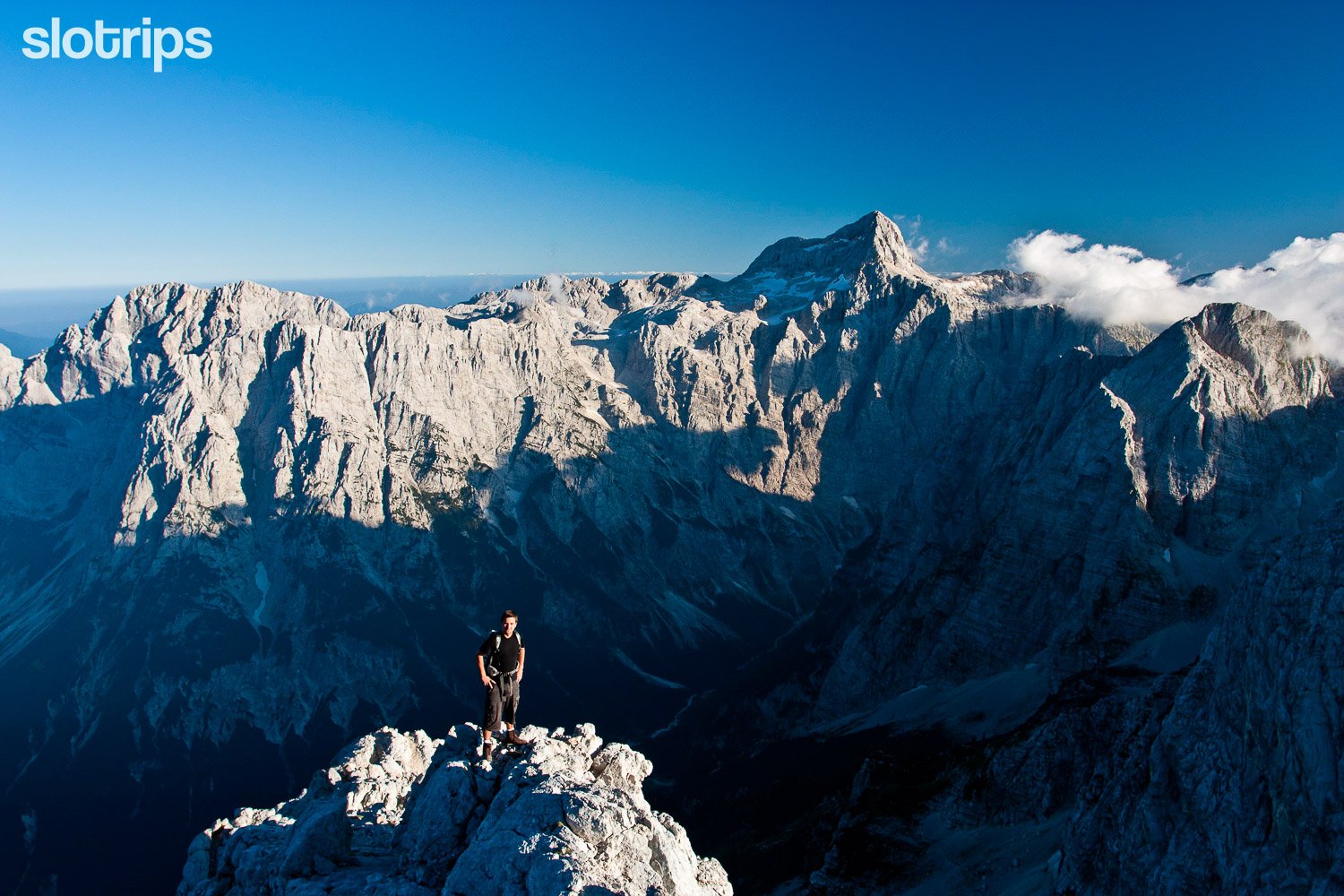
A Slotrips hiker standing on a dramatic limestone peak high above the Vrata Valley in Triglav National Park, Slovenian Alps.
High above Vrata valley in the Triglav National Park
A Slotrips guided walking tour group strolling through the lush green vineyards and rolling hills of a Slovenian wine region.
Hiking in Slovenia's wine regions

Slovenia - the land of mountain lovers.

Slovenes have always had a special attitude towards our hills and mountains. We respect and love them; we also honor them: Slovenia is one of only two European countries that have a mountain symbol even in the flag! There are seven such countries & flags in the world. The mountains call us to themselves, they offer us inspiration and shelter. That’s why we love to hike, stroll, walk & climb. Here we calm down and rest, here we are in nature, among the springs of numerous high-quality waters and in vast forests that cover almost 60% of Slovenia’s surface. No wonder Slovenia is referred to as the green pearl of Europe.

Visit us and you will get to know why Slovenia is both: a land of hikers and a land for hikers!

Hiking in Slovenia Map

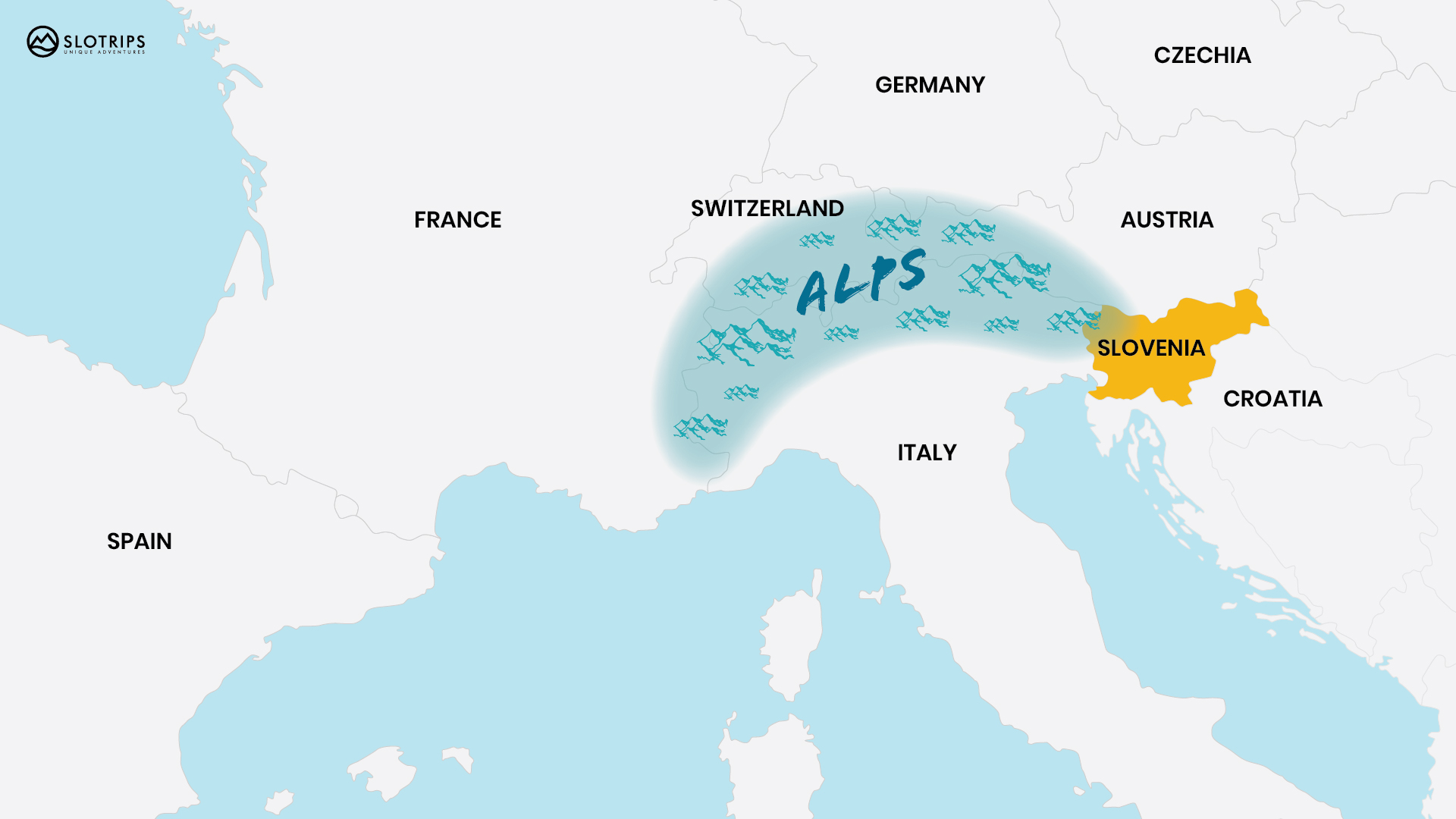
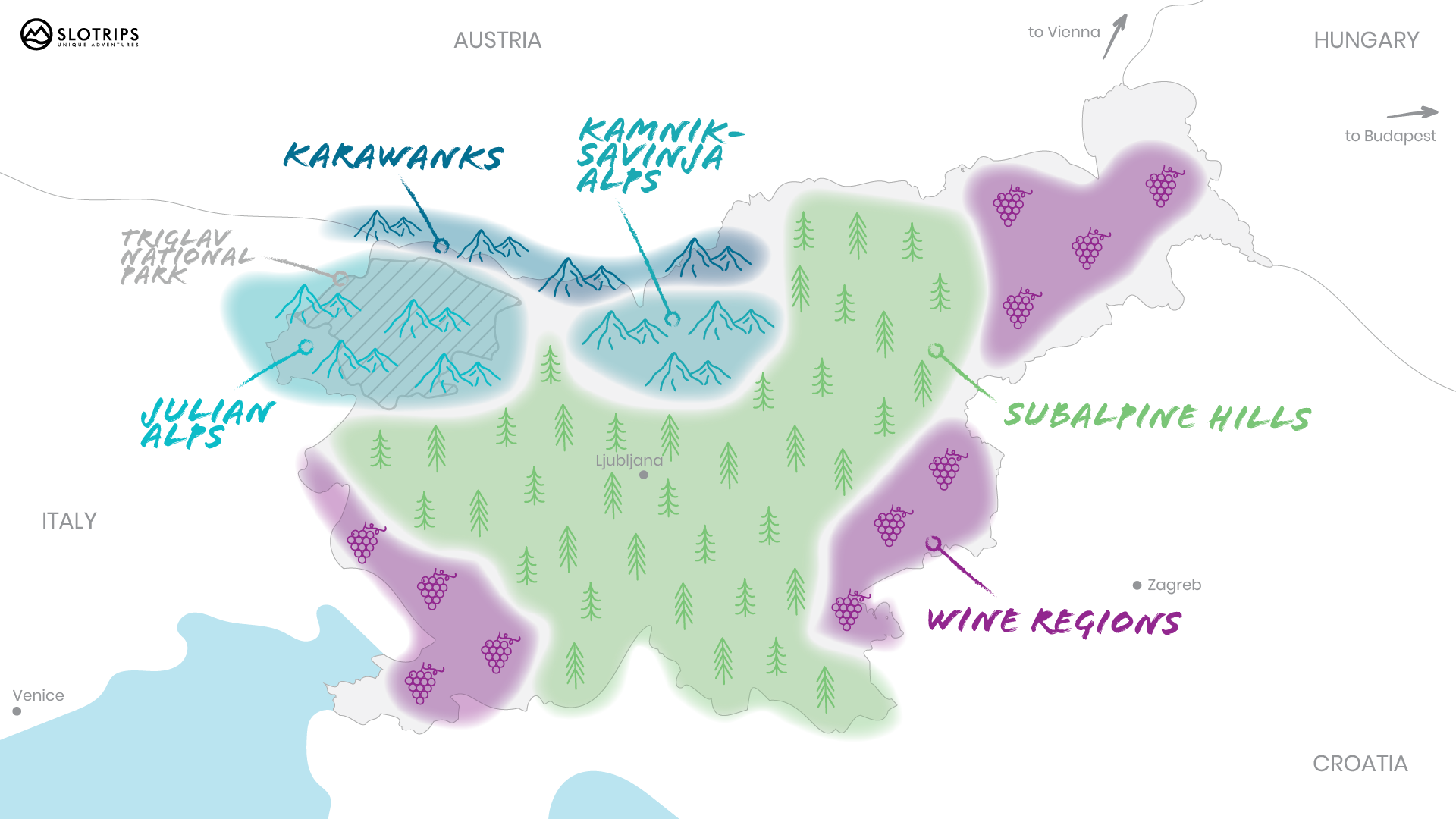
As the highest European mountain range, the system of the Alps stretches in a 1,200-kilometer arc between France and Slovenia. The maps below give you an overview of Slovenian hiking regions and a general introduction of “what is where”.

Illustrated map showing the European Alps extending into Slovenia, bordering Italy, Austria, and Croatia.
Illustrated map of Slovenia's hiking regions, including the Julian Alps, Karawanks, Kamnik-Savinja Alps, and wine regions.

The Slovenian Alps

The Slovenian Alps are definitely the most spectacular place for your hiking holidays in Slovenia. They consist of three mountain chains:

  1. The Julian Alps – the largest one, located in Slovenia’s northwest (with its western tip peeking into Italy) and home of the stunning Triglav National Park.
  2. The Karawanks – the longest high mountain ridge splitting Slovenia and Austria.
  3. The Kamnik-Savinja Alps – the only high-altitude system whose high peaks are exclusively on Slovenian territory.

The landscape of the Julian Alps and the Kamnik-Savinja Alps is very similar to the Italian Dolomites. You’ll climb white limestone peaks, hike extensive spruce & larch forests, and walk lively mountain meadows with shepherds’ dairy farms. But compared to other parts of the Alps, there is much less infrastructure and you won’t find high alpine roads or cable cars taking you to a fancy lodge on the top of every hill. When hiking in Slovenian Alps you will (mostly) have to earn your views. It is more rustic, pristine, and we dare to say – authentic!

The tree line in Slovenia is at approx. 1,600m (5,500ft) and this high mountain world covers 11% of Slovenia’s entire territory. Above the tree line, you should expect rugged limestone terrain, lots of gravel, rocks, steep descents & ascents on sometimes narrow trails. Limestone is porous and there is almost no surface water at higher elevations, thus the options to refill water during your hike are very limited.

The crystal clear (and ice-cold) water re-emerges on the surface abundantly in the verdant valleys where you’ll find many easier & beautiful hikes along rivers, lakes, to spectacular waterfalls, past lonely farmhouses, and through tiny alpine villages. 

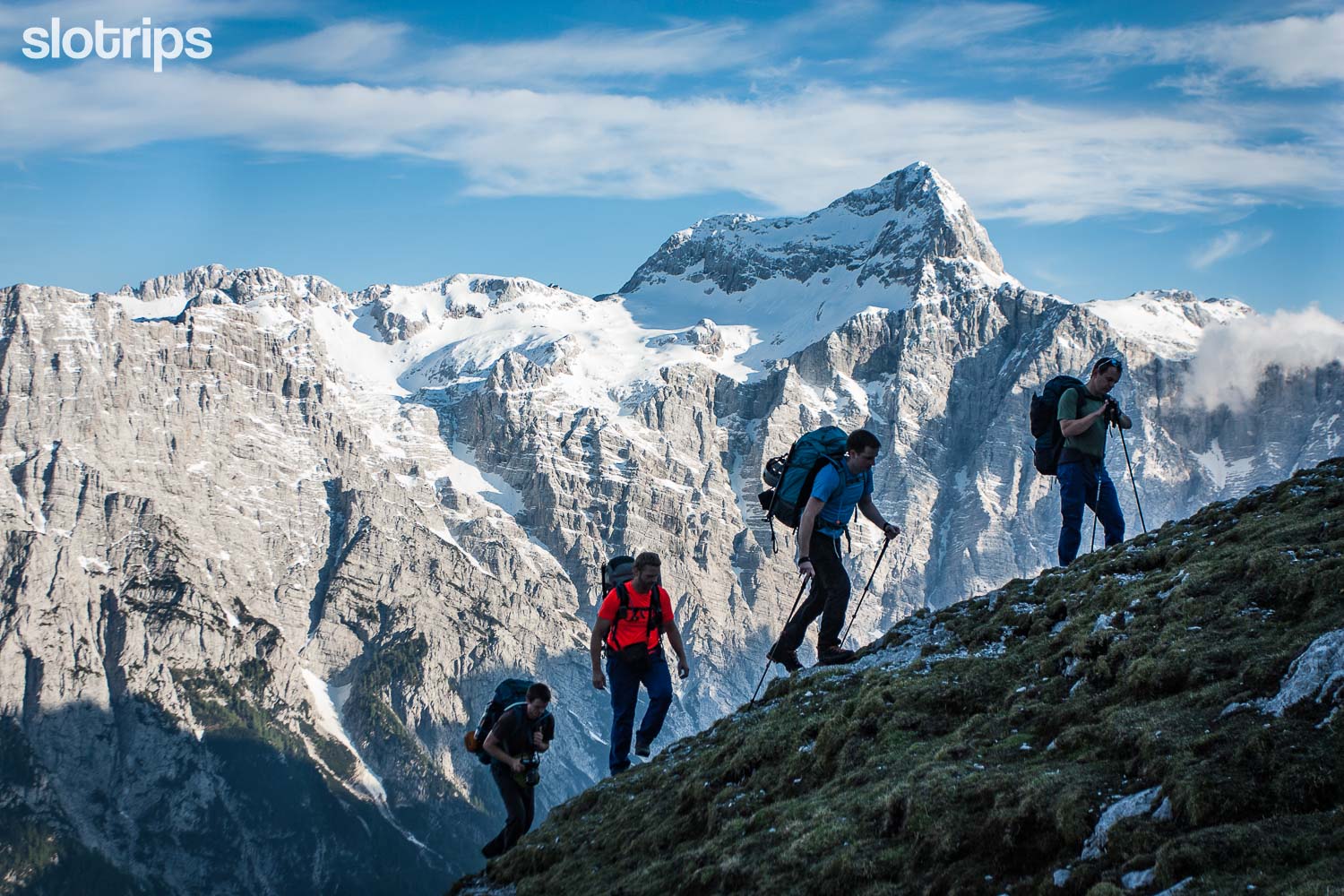
A guided Slotrips hiking group ascending a steep, grassy trail beneath snow-capped limestone peaks during a spring trek in Triglav National Park, Slovenia
Spring hiking in the Triglav National Park, Slovenia

Hiking in the Julian Alps

The Julian Alps are the most extensive and most important part of alpine Slovenia. Here fifteen of Slovenia’s highest peaks rise up to the skies, including Mt. Triglav – Slovenia’s highest mountain. The main massifs of the Julian Alps are built of limestone and dolomite up to 200 million years old. Since they were once covered by the sea, don’t be surprised if you come across fossils of shellfish and other marine organisms while hiking through their rock foundations.

Due to its special importance as a natural whole, Unesco has declared the Julian Alps a biosphere reserve. At the same time, almost all of Slovenia’s Julian Alps are located within the protected area of the Triglav National Park, which was established in 1924 as one of the first protected territories of this kind in Europe. That being said:

If you are hiking in the Triglav National Park you are most certainly hiking in Slovenia's Julian Alps.

The Julian Alps are squeezed into Slovenia’s north-western corner with the Sava river bordering its north-east side and the turquoise Soča river cutting through the heart of the Julian Alps from north to south.

For day hikes it is best to base yourself in one of the alpine valleys or towns around Lake Bohinj, Lake Bled, the Kranjska Gora region, or the spectacular Soča Valley. These mountain centers offer comfortable hotels & dining options, but also a wide variety of other activities like cycling, fly-fishing, water sports, swimming, rock climbing, paragliding, and more. Making them a great choice for your multi-active holidays in Slovenia.

Best day hikes in the Julian Alps & Triglav National Park

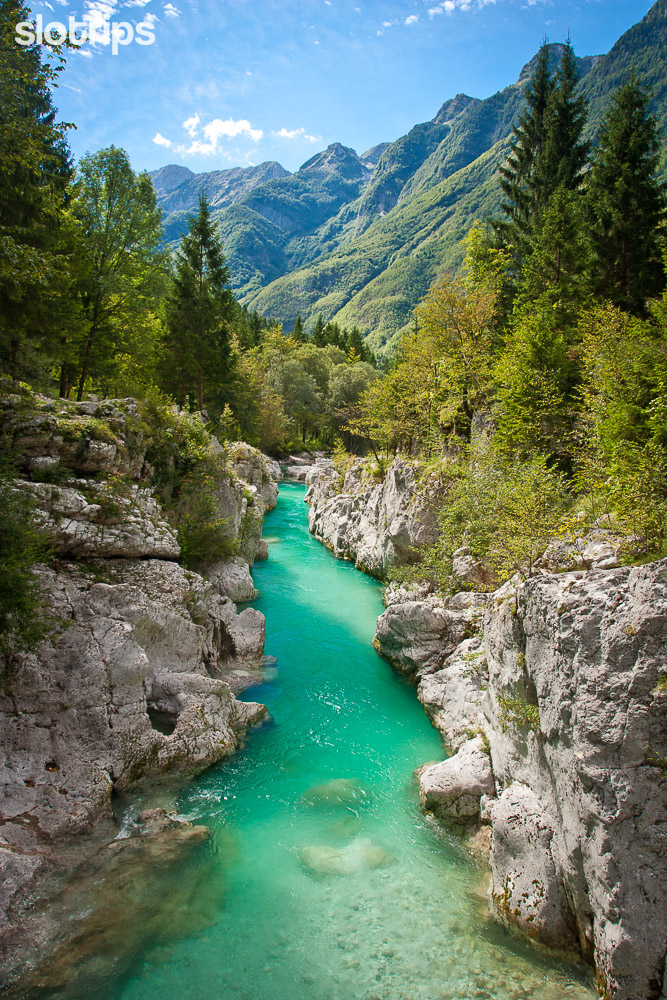
The vibrant emerald green waters of the Soča River carving through a white limestone gorge, a scenic highlight on Slotrips hiking tours in the Julian Alps.
Hiking in the Soča Valley, Julian Alps
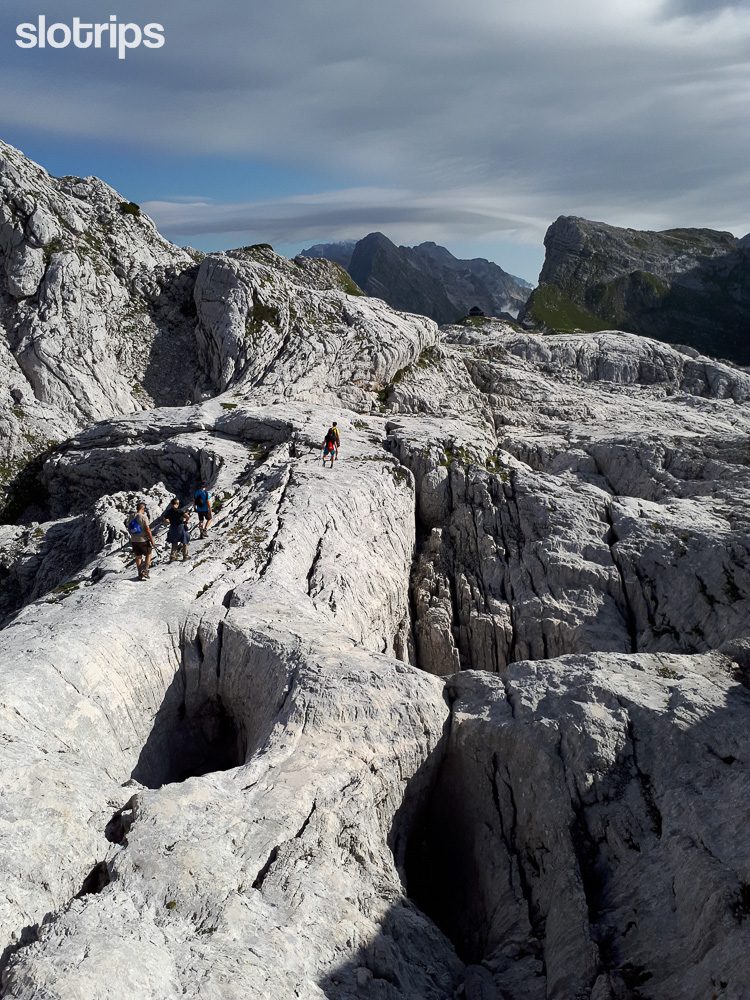
ur Slotrips hikers navigate the deeply crevassed, moon-like white limestone terrain of an alpine karst plateau in the Julian Alps.
Hiking across alpine karst in the Julian Alps, Slovenia

The Julian Alps are also the most extensive area for hut-to-hut hiking in Slovenia with numerous multi-day trekking routes. Don’t expect a walk in the park and you’ll have to be reasonably fit to enjoy a multi-day hike in the Julian Alps.

Generally speaking, the hut-to-hut routes on the south side (around Lake Bohinj) are easier. The more ambitious hikers who are ready to tackle steeper trails and occasional sections secured with steel cables should consider the Julian Alps traverse from north to south (from Kranjska Gora to Lake Bohinj). Don’t forget: hut-to-hut hiking tours in the Julian Alps are only possible from late June until late September when the mountain huts are open!

If you are up for a more comfortable inn-to-inn hiking tour with luggage transfer try the spectacular Alpe-Adria Trail (our favorite!) or the newly designed Juliana Trail. They are both doable between April and November.

How about a circular loop around the Julian Alps by bike?

Our favorite hiking tours in the Julian Alps & Triglav National Park

HUT-TO-HUT HIKING TOURS
3-day guided: Best of Julian Alps Hut-to-Hut
4-day self-guided: Triglav National Park Adventure

INN-TO-INN HIKING TOURS
3-day guided: Best of Alpe Adria Trail
4-day self-guided: Alpe Adria Trail Adventure
8-day self-guided: Best of Alpe-Adria & Juliana Trail

ALL-IN-ONE HIKING TOURS
8-day guided: Best Walks in Slovenia
8-day guided: Discover the Slovenian Alps
9-day self-guided: Mountains to Sea

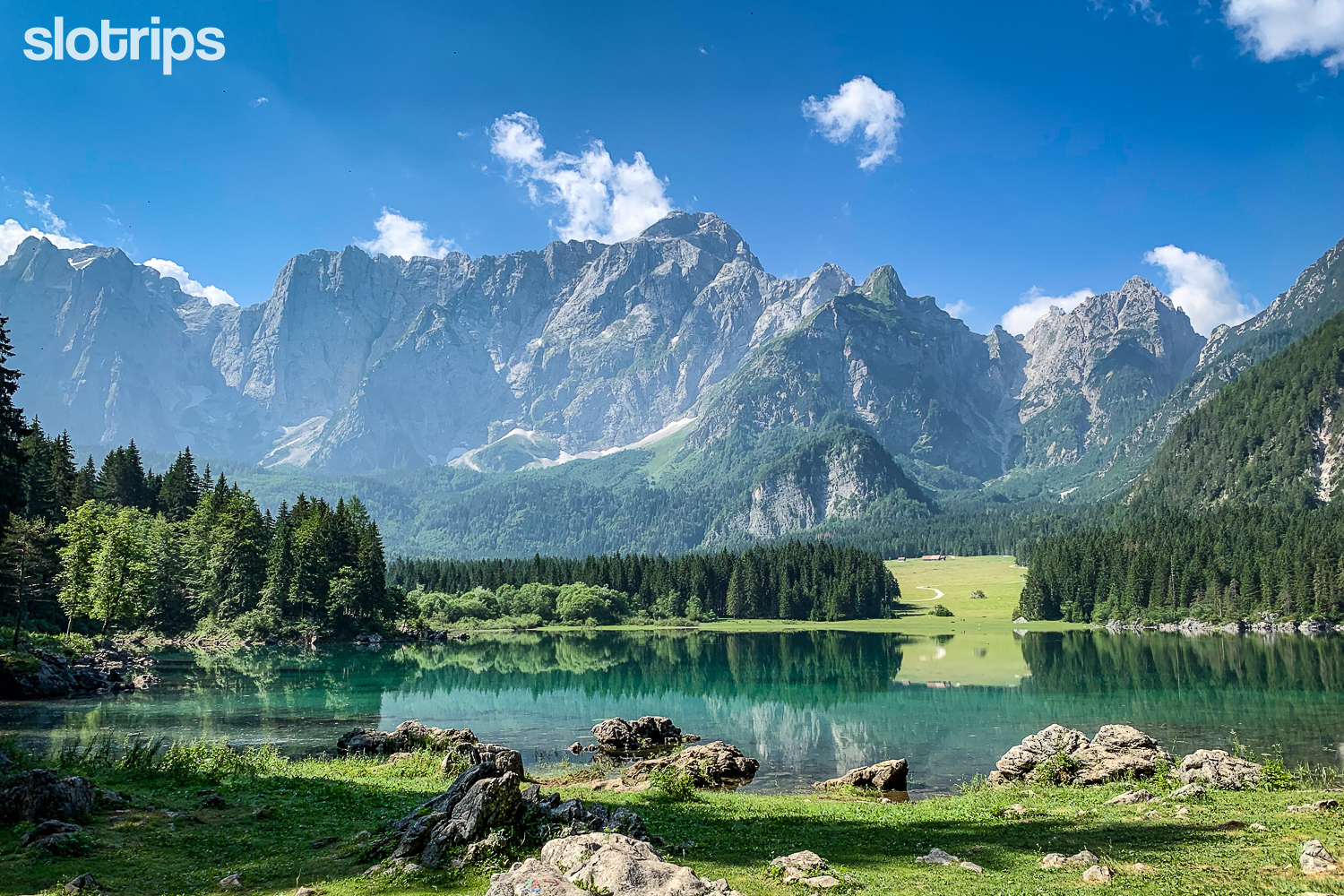
The spectacular limestone peaks of the Slovenian Julian Alps viewed across the border from Italy's pristine Fusine Lakes during a cross-border Slotrips hike.
View of the Julian Alps from Italy's Fusine Lakes, just across the Slovenian border
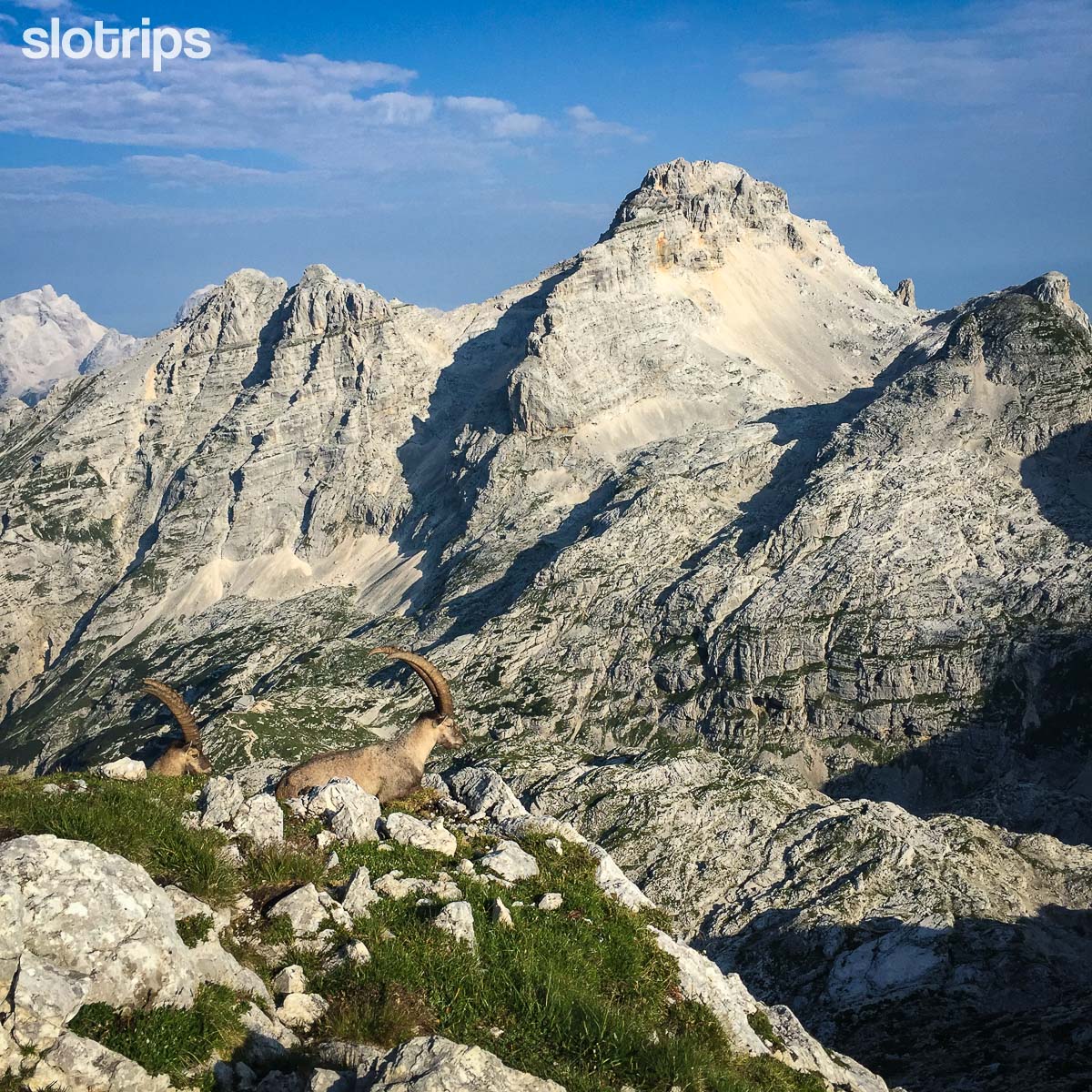
A herd of wild Alpine ibex resting on rocky terrain in the Valley of the Seven Triglav Lakes, spotted during a guided Slotrips trek in Triglav National Park, Slovenia.
A group of ibex in the Valley of Seven Triglav Lakes
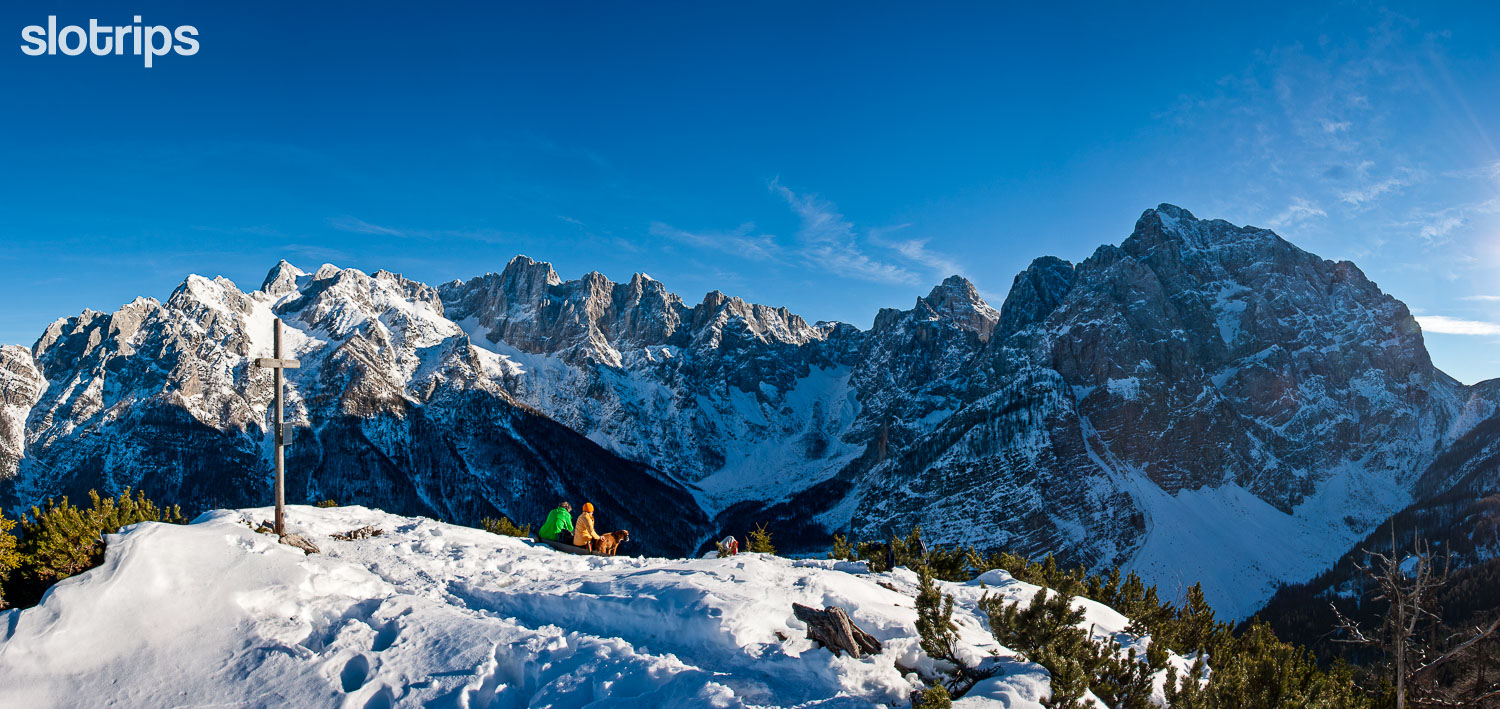
A well-equipped Slotrips hiker trekking through a pristine, snow-covered winter wonderland in the Slovenian Alps, highlighting the region's year-round hiking options.
There are countless options for winter hiking in Slovenia

Hiking in the Karawanks

The Karawanks is the longest Slovene mountain range. Their saddles and ridges stretch from the triple-border between Italy, Austria, and Slovenia, and then mostly along the Slovenian-Austrian border further 120 kilometers to the east.

In general, the Karawanks are more accessible and friendly for hikers than the Julian Alps and the Kamnik-Savinja Alps. Their massifs are not intersected by such magnificent alpine valleys, their north sides are usually steep & rocky, but the southern, green slopes on the Slovenian side are gentler. Therefore hikes to the Karawanks’ peaks or along individual ridges are usually shorter and easier.

As a long ridge, the Karawanks offer some exceptional ridge crossings, for example, our Trekking the Karavanks hut-to-hut hiking trip. Or crossing the longest single Slovene mountain, Košuta. How about the wonderfully wild border trails above Kranjska Gora and Jezersko? A hidden gem!

Because of easier access, there are fewer mountain huts in the Karawanks. They are mostly a popular “pit-stop” for local day hikers. Of course, many stages of long-distance trails have to lead through such a long ridge as well: Slovene Mountain Trail runs across the Karawanks, and a few sections of the international trail Via Alpina as well.

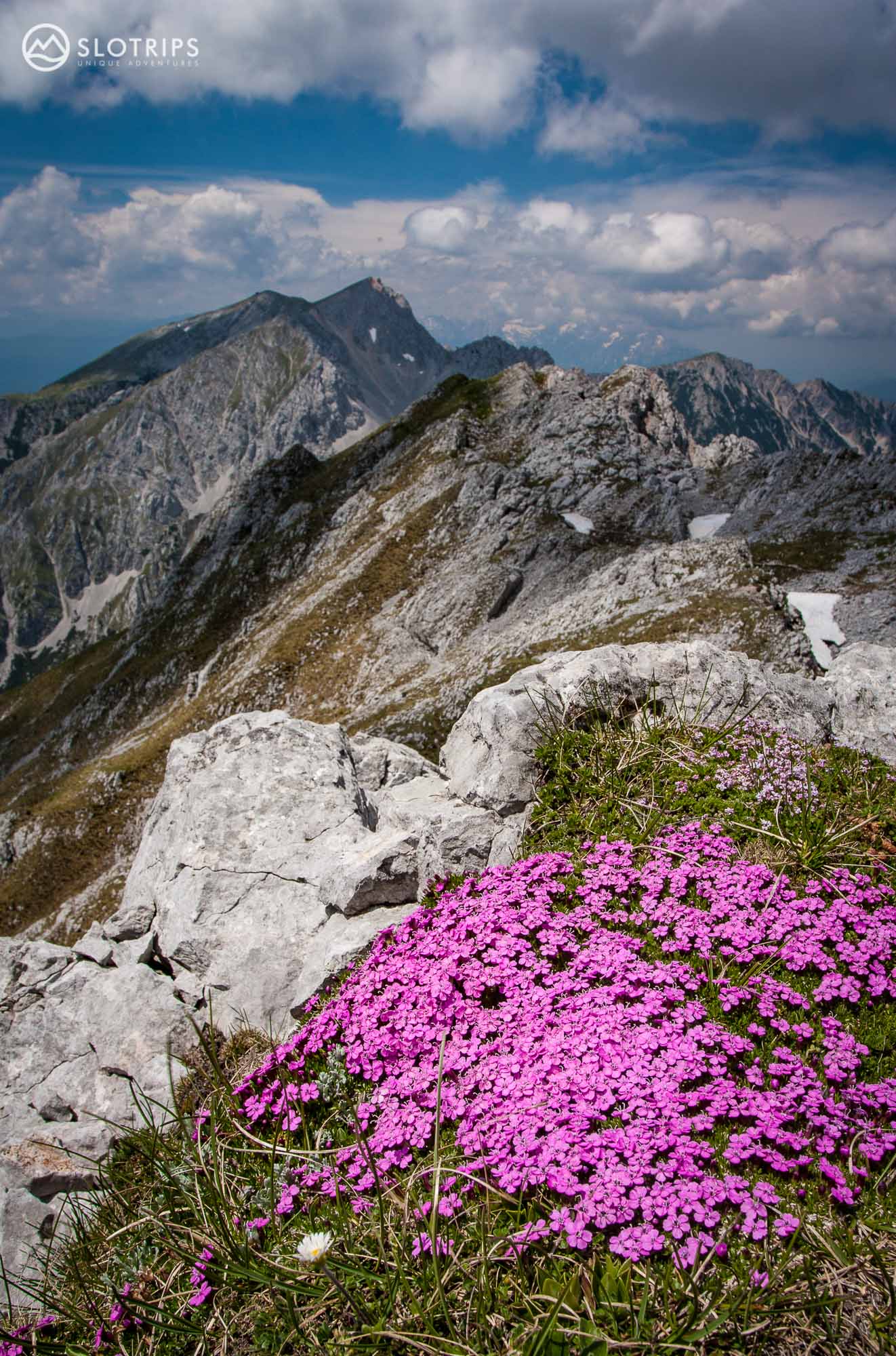
Hike the Karawanks towards the end of May & June and you will be surrounded by carpets of colorful flowers along the way. The slopes of Golica, for example, will be all white  – because of flowering daffodils, not because of snow.

Best day hikes in the Karawanks

Slotrips hikers walking along the scenic, grass-covered Košuta ridge in the Karawanks mountain range during vibrant autumn weather in Slovenia.
Hiking Slovenia's Košuta ridge in the Karawanks in fall
A panoramic view of the Karawanks mountain ridge serving as the natural border between Slovenia and Austria, a classic scenic route for Slotrips walking tours.
Karawanke border ridge between Slovenia & Austria
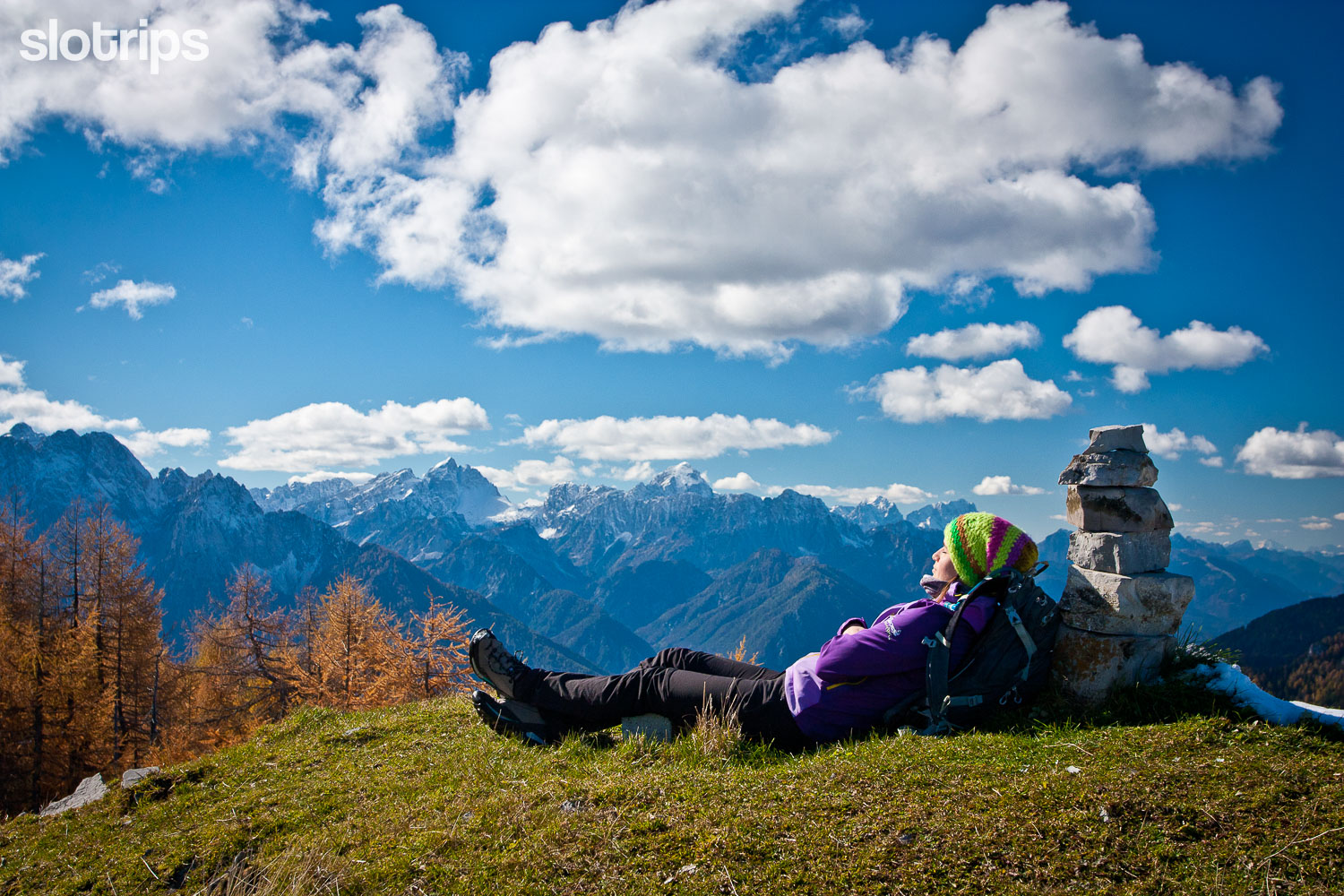
Slotrips hikers enjoying clear autumn weather from the Karawanks ridge, looking out over a spectacular panoramic view of the highest peaks in the Julian Alps, Slovenia.
Amazing hiking weather in Karawanke with the view of the Julian Alps in fall

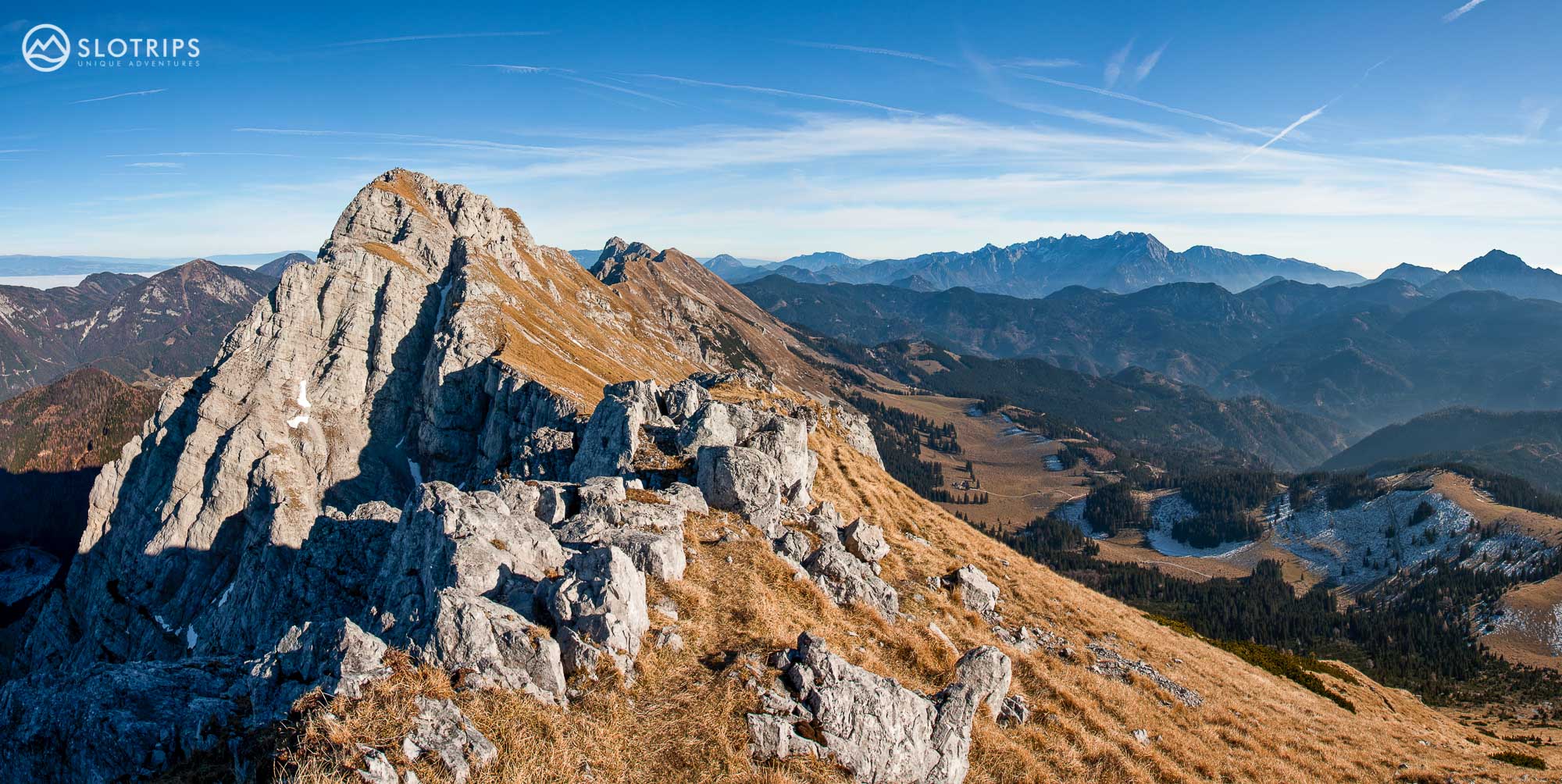
Hiking in the Kamnik-Savinja Alps

If you look north from the old city center of Ljubljana on a beautiful day you will immediately spot the Kamnik-Savinja Alps. In the length of 66 kilometers from west to east and a width of up to 20 kilometers, they occupy the central northern part of Slovenia.

The Kamnik-Savinja Alps, named after Kamnik (a cute medieval town) on their southern slopes and Savinja (an alpine river & a fly-fishing paradise) in the north, are wilder than their Karawanks neighbors. There are basically very few high mountain roads to make your access to the trailheads easier. This means you will have to overcome up to 1500m (5.000ft) of elevation gain to climb the highest peaks of the Kamnik-Savinja Alps.

If you add the rough karstic terrain and several via-ferrata sections you’ll come across along your way, you are getting a proper mountain adventure. Keep in mind: there are fewer mountain huts in the Kamnik-Savinja Alps and the multi-day hiking routes are only suitable for very fit and experienced hikers.

Logar Valley, Velika Planina, Jezersko

On the other hand, several exceptional pearls are easily accessible for hikers: the Logar Valley with Rinka waterfall, probably one of the most beautiful alpine glacial valleys in Slovenia, and Velika Planina, one of the largest and most beautiful active alpine meadows in Europe. A hiker’s paradise, no matter the season!

If you are looking for a place to base yourself for a couple of days and explore the Kamnik-Savinja Alps, you should consider the wonderful alpine hamlet of Jezersko or one of many organic alpine farms in & around the Logar valley. Your best choice for off-the-beaten-path hiking holidays in Slovenia!

Best day hikes in the Kamnik-Savinja Alps

  • Velika Planina – best easy (& popular!) hike on the biggest alpine meadow
  • Kamnik Saddle & Mt. Brana – best serious hike in Kamnik-Savinja Alps
  • Mt. Grintovec – the highest peak of Kamnik-Savinja Alps
  • Goli Vrh in Jezersko or Govca (Olševa) above the Logar Valley.
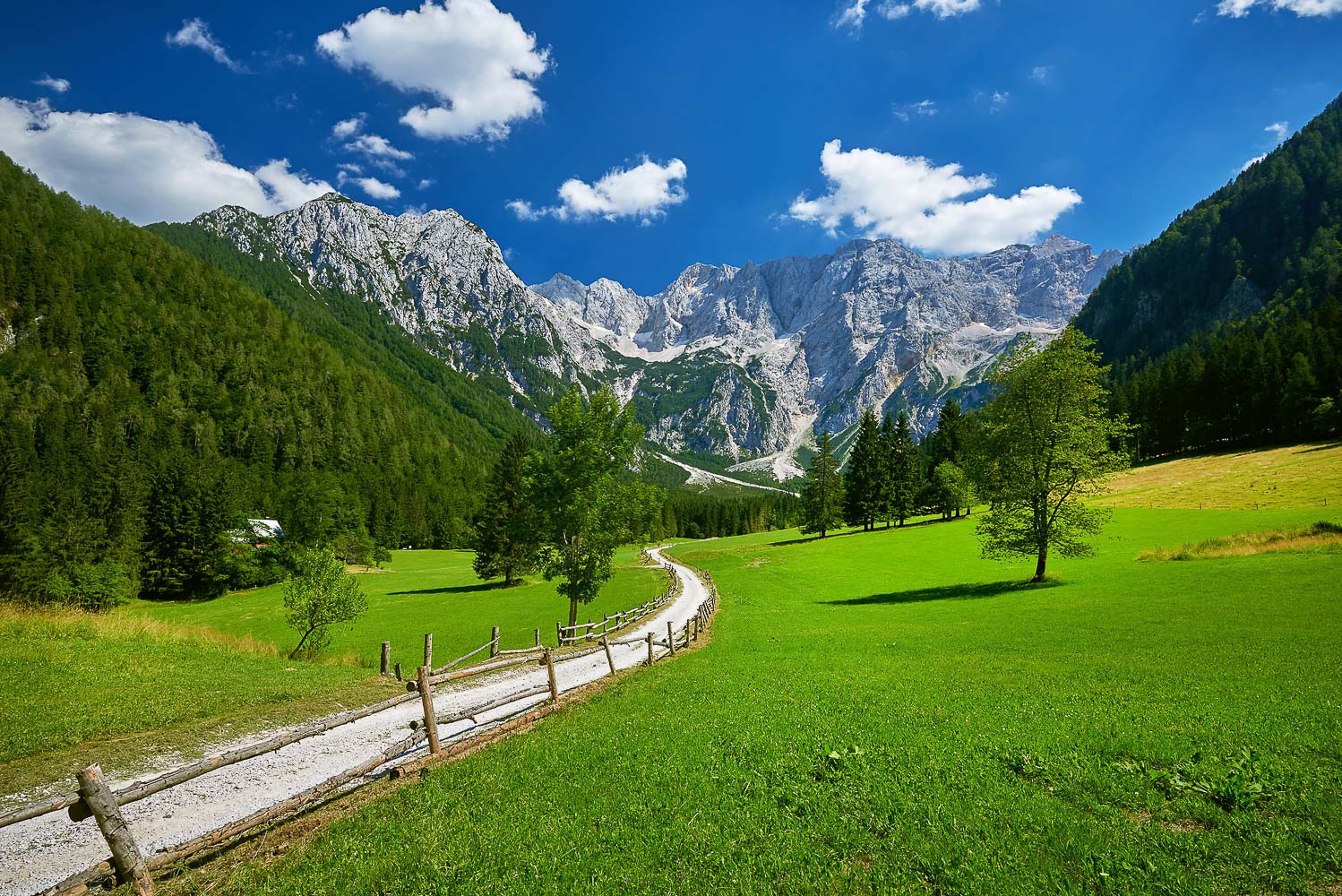
A picturesque dirt walking trail winding through a lush green alpine meadow toward the towering, jagged grey peaks of the Kamnik-Savinja Alps in Jezersko, Slovenia, a popular destination for Slotrips valley walks.
Valley walking in Jezersko (photo by: Tomo Jeseničnik for STO)
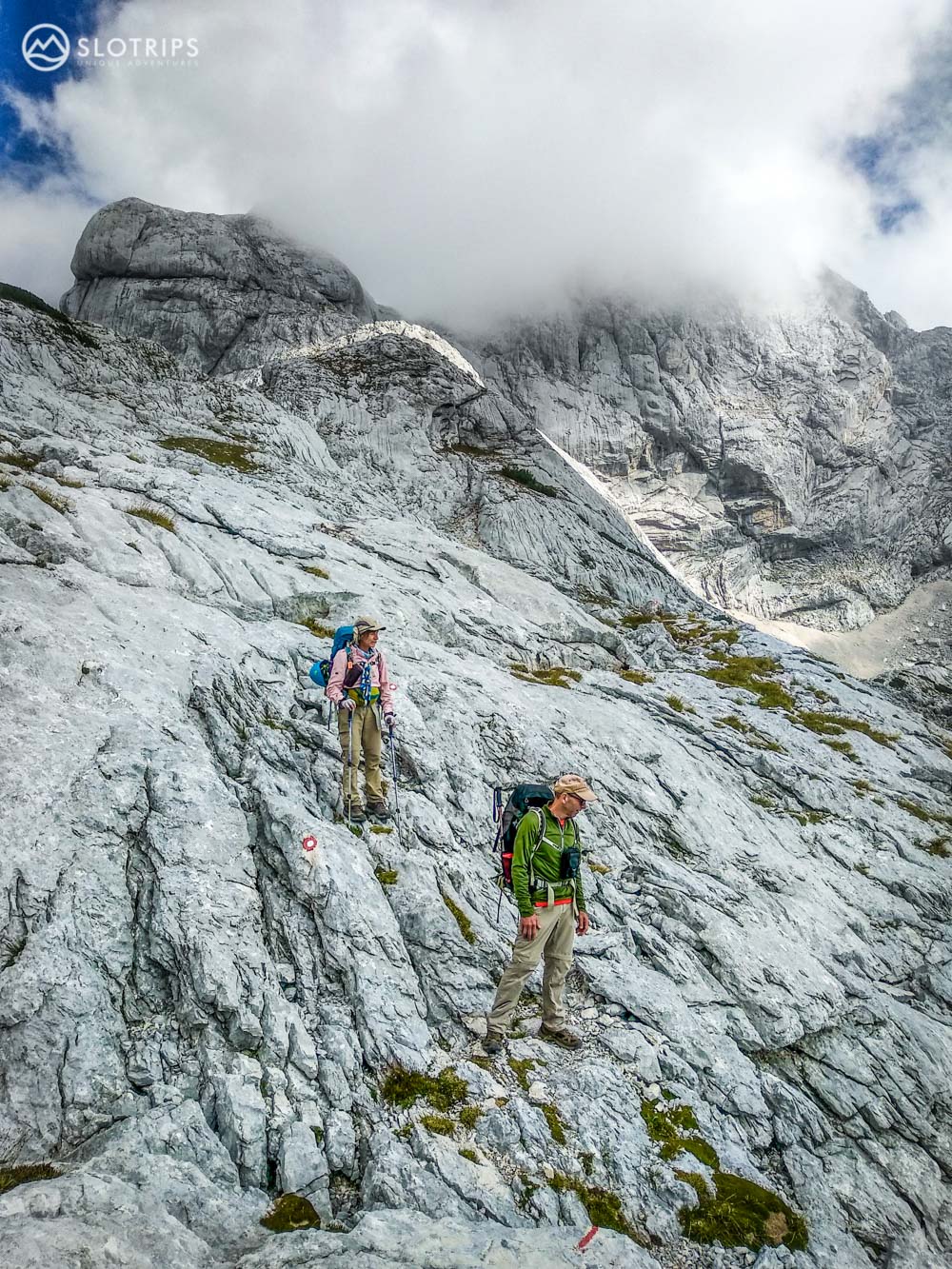
Two Slotrips hikers carefully descending a steep, rugged white limestone rock face marked with a traditional red and white trail blaze in the high-altitude Kamnik-Savinja Alps, Slovenia.
Rocky landscape of the Kamnik-Savinja Alps
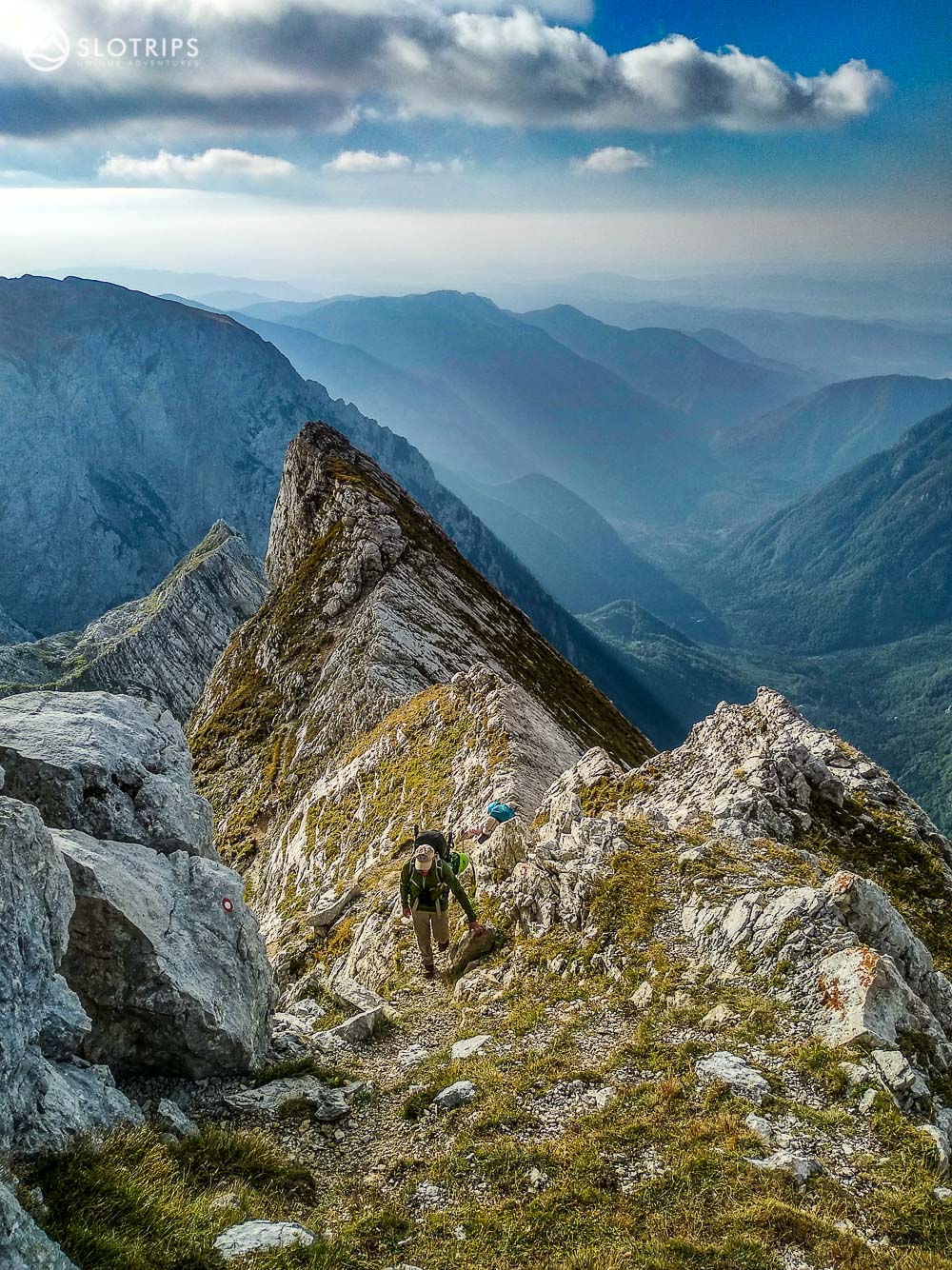
A Slotrips hiker traversing a dramatic, narrow, rocky mountain ridge with sweeping views of deep green valleys during a multi-day hut-to-hut trek in the Kamnik-Savinja Alps, Slovenia.
Hiking hut-to-hut in Kamnik-Savinja Alps
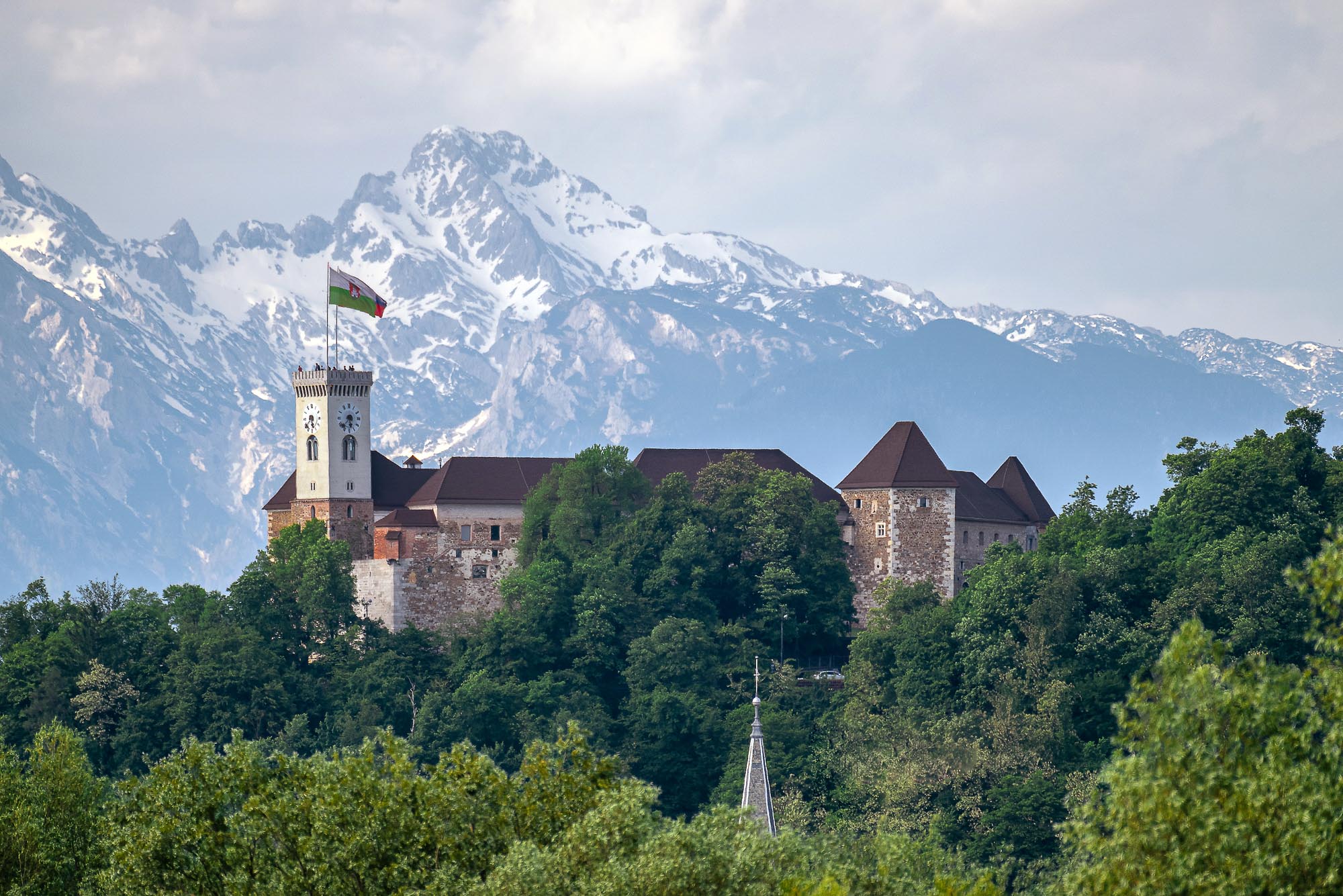
The historic Ljubljana Castle sitting on a forested hill in Slovenia's capital city, with the spectacular snow-capped peaks of the Kamnik-Savinja Alps towering in the background, a common starting point for Slotrips tours.
The Kamnik-Savinja Alps with Ljubljana castle in the foreground (photo by: Andrej Tarfila for STO)

Hiking in Slovenian Subalpine Hills

As the Slovenian Alps descend towards the south & east, you will enter the land of extensive forests, green valleys, hills dotted with small villages, and scattered mountain farms with steep meadows and pastures. This is the typical Slovenian countryside you will find basically all over the country. While it might not be super high on your hiking bucket list, it will give you a great insight into the Slovenian culture & way of life.

Here you will barely meet any foreigners, but mostly us, the locals on our after-work hike or a family walk to our favorite mountain hut for Sunday lunch. Join us on these trails, grab a basket and go mushroom picking, forage the wild berries, ramsons (wild garlic) for pesto, elderflower for syrup, dandelion for salad, rosehip for tea, stinging nettles for a soup or pie (yes!), and the list goes on and on! Do you like foraging? Let us know and we will include it in your customized hiking trip in Slovenia!

Enough food, let’s talk hiking again! The highest peaks of the subalpine region reach the tree line at around 1,600m (5,000ft) rewarding you with exceptional views. Hike up there to feel the winds above Vipava valley on Nanos, explore the karstic terrain (and maybe meet a bear) on Snežnik, follow the Rapallo border on Blegoš & Porezen, or discover the Lovrenc Lakes on Pohorje.

How to choose your hikes?

To be honest, the list of possible day hikes in the subalpine region is simply too long. There is plenty of them all over Slovenia. But, how should you choose your hikes? First, decide about your other holiday interests and you’ll find plenty of day hikes in that same area

Don’t forget: the Slovenian subalpine hills are also perfect for your cycling holidays! A great way to explore Slovenia’s pristine countryside.

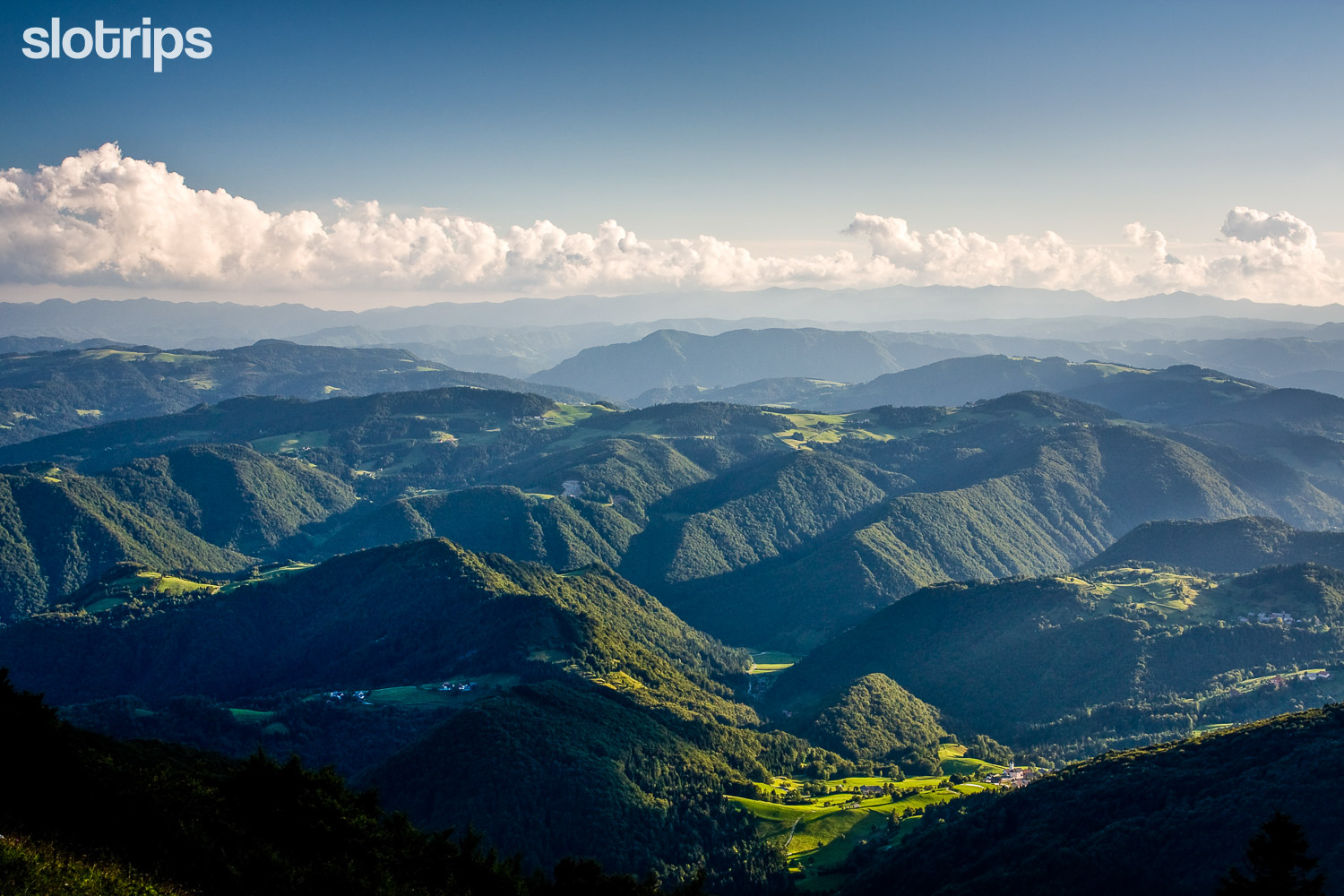
A sweeping panoramic view of the lush, rolling green subalpine hills and valleys of the Slovenian countryside, a tranquil alternative to the high peaks on Slotrips walking tours.
Typical Slovenian countryside of the subalpine hills and valleys
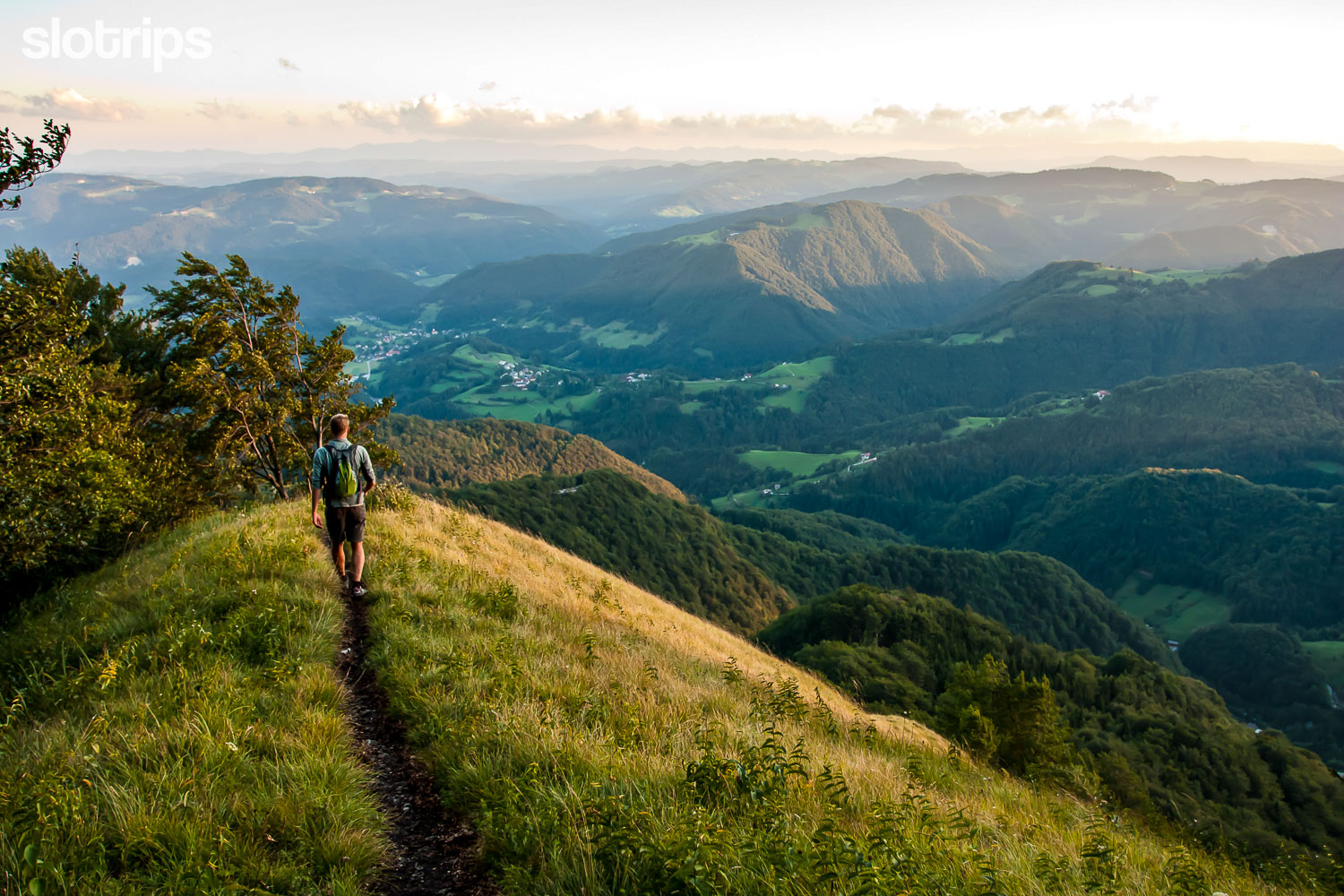
A Slotrips hiker walking along the scenic, sunlit grassy ridge of Mount Blegoš near Škofja Loka, looking out over expansive green valleys and the Slovenian subalpine hills at sunset.
Hiking on Blegoš near Škofja Loka
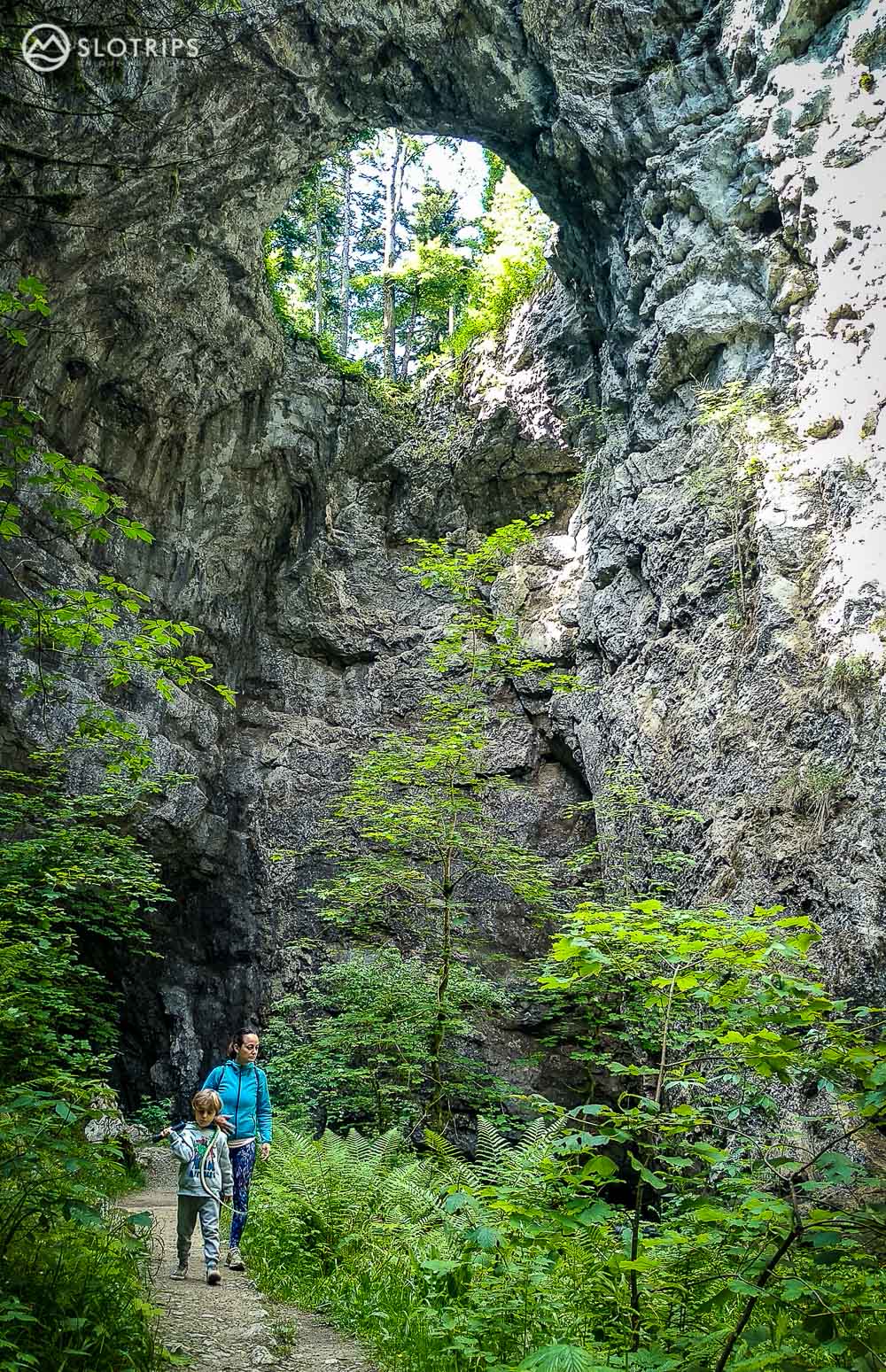
A family on a Slotrips walking tour exploring the dramatic karst phenomena, walking on a lush forest path beneath a massive natural limestone archway at Rakov Škocjan, Slovenia.
Karst phenomena at Rakov Škocjan

Hiking in Slovenia's Wine Regions

Who doesn’t like a nice hike through the vineyards, making pit-stops at local wine cellars, passing through tiny villages, and pampering your tastebuds with fabulous local cuisine? Again, Slovenia has a plan!

Slovenian wines might not be world-famous, but we promise you: You will be pleasantly surprised! Most of the wineries are small family-run properties, producing (and drinking) wine with love and pride for generations. The wines have very different characters because the families produce wine for themselves. The wine they like. And they’ll be happy to share it with you! Get ready for an exceptional hike, wine & dine journey!

Marked hiking trails and at least partly organized day hike possibilities are now offered by almost all Slovene wine-growing regions: the Karst, Vipava Valley, Goriška brda, Istria, Dolenjska, and Štajerska. We particularly like the region of Svečina on the Slovene-Austrian border, where the local tourist office has designed & marked five circular hiking routes.

For a week-long inn-to-inn hiking trip from the Alps to Slovenia’s finest wine regions try our self-guided hiking tour Alpine Heights & Coastal Delights. Why? With one word: Diversity!

Keep in mind: the hiking routes through the wine regions usually include several sections along local low-traffic asphalt or gravel roads.

How about the weather? Avoid summer and rather hike in spring or fall. Read more…

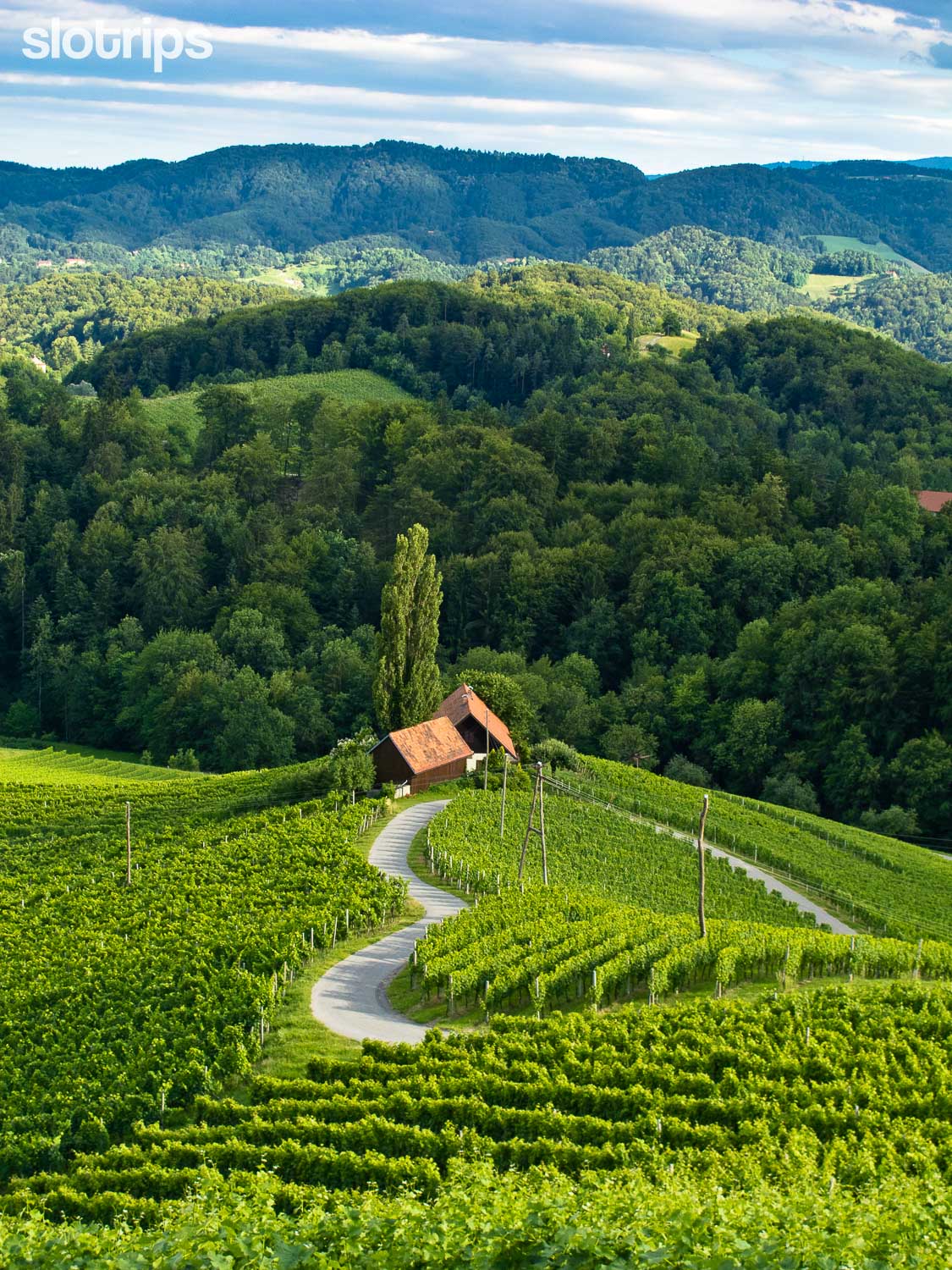
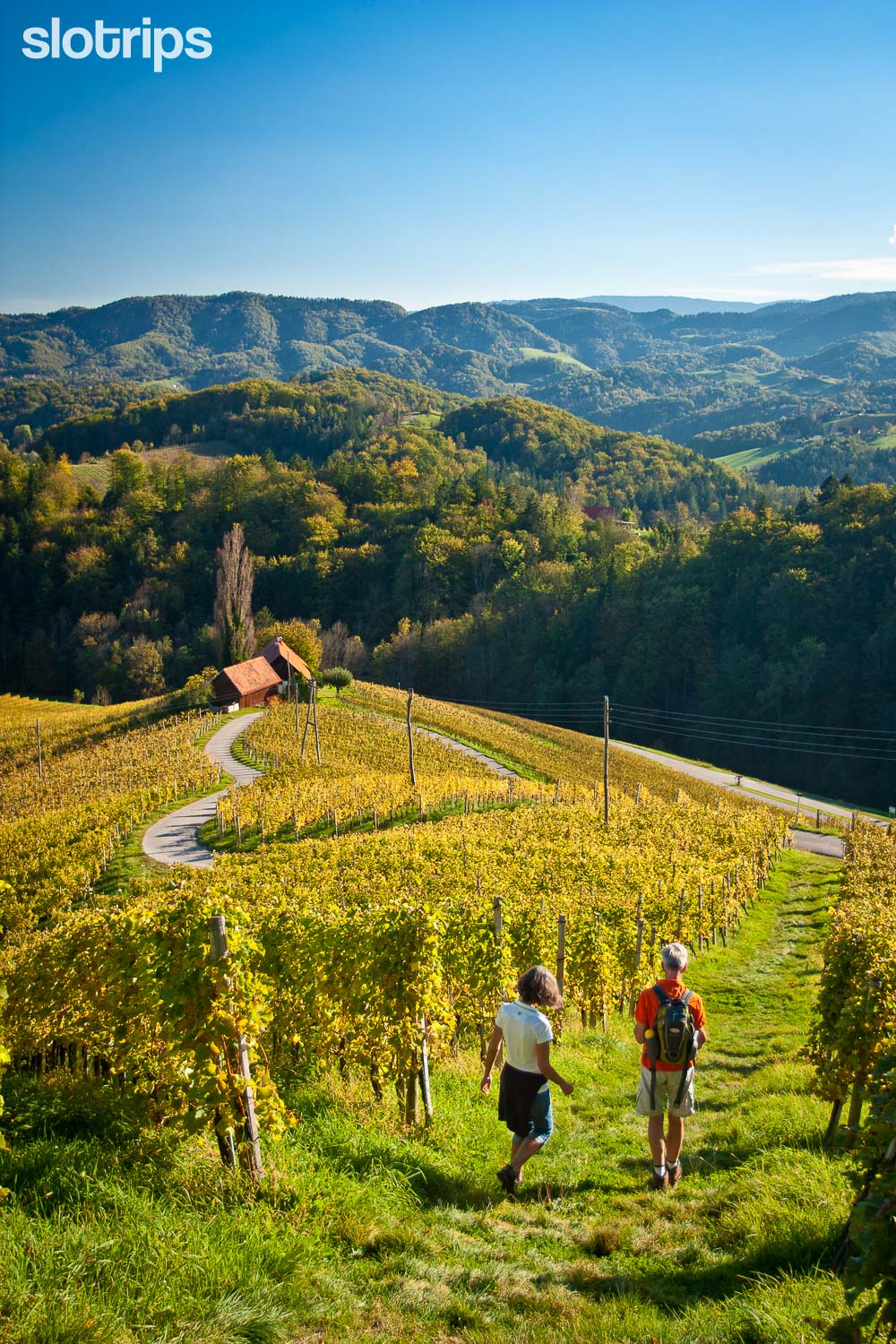
The famous heart-shaped winding road cutting through vibrant green terraced vineyards in Svečina, a picturesque highlight of Slovenia's wine regions for Slotrips walking tours.
Slovenian wine heart in Svecina
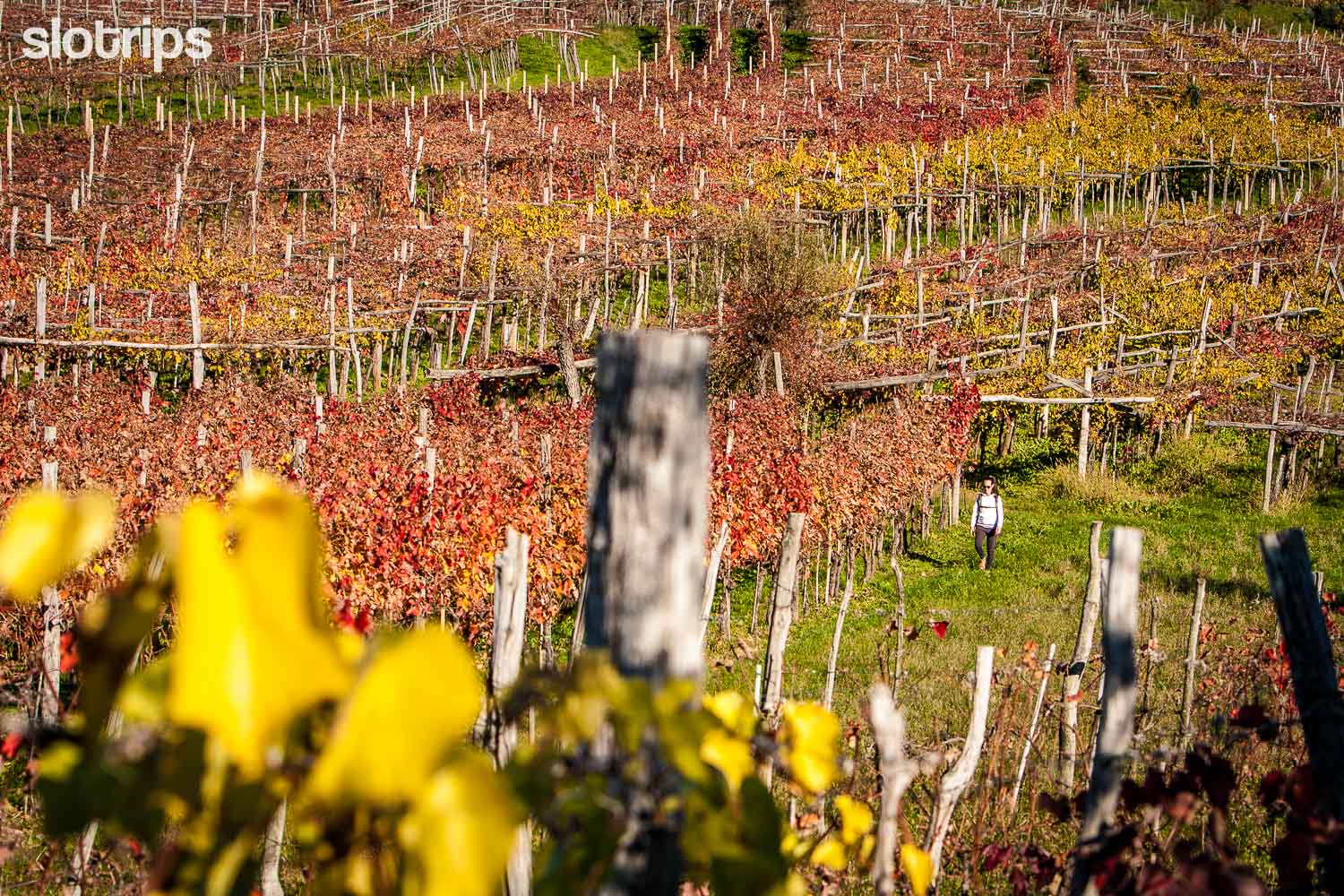
A Slotrips hiker walking through scenic terraced vineyards displaying vibrant red and gold autumn foliage during a fall walking tour in the Slovenian Karst wine region.
Hiking in the Karst region in fall
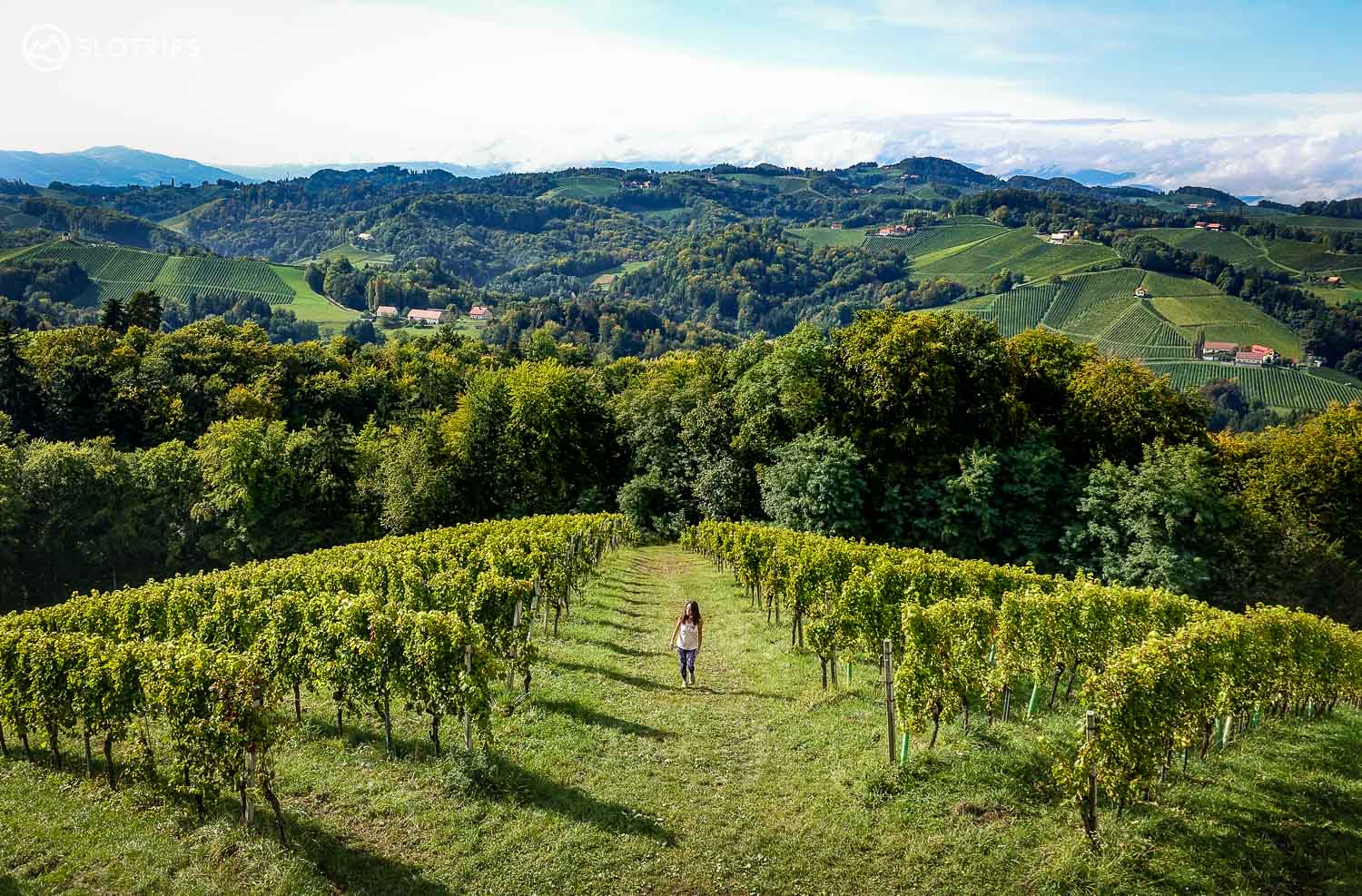
A Slotrips hiker strolling down a grassy path between rows of lush green grapevines on the scenic Styria wine road, located on the rolling hills of the Slovenian-Austrian border.
Hiking the Styria wine road on Slovenian-Austrian border
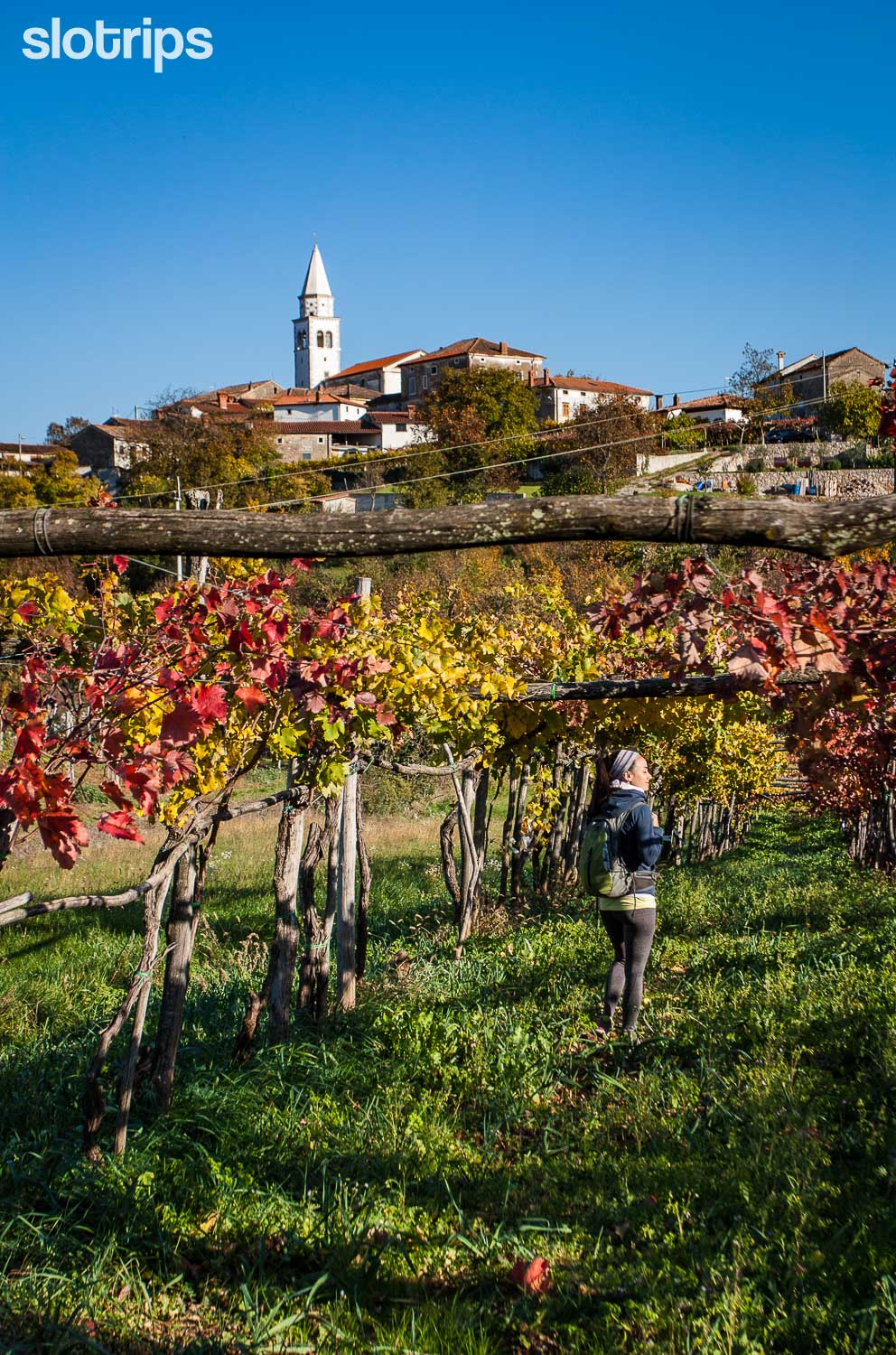
A Slotrips hiker admiring colorful autumn grapevines with the traditional stone village of Pliskovica and its church tower rising in the background in the Slovenian Karst region.
Hiking near Pliskovica village on Karst

Multi-day stage hiking trails in Slovenia

Slovenes were the European pioneers of long-distance hiking trails. Already in 1953, we got the ambitious Slovene mountain trail. It connects the east of the country, via the sub-alpine hills and all three high mountain ranges with the Adriatic Sea. Since then, many new long-distance trails emerged and you can choose from demanding hut-to-hut high-alpine trekkings to comfortable inn-to-inn hiking journeys, allowing daily luggage transfer.

Most of us do not have the time to hike a 700km trail in 40 days. That’s why we have done the work for you and have chosen the best sections of these hiking trails and zipped them into 3 to 9-day hiking trips. Be it guided or self-guided. See suggestions below.

Slovene Mountain Trail

This 617km long-distance trail starts in Maribor and first ascends into the fresh, dark spruce forests of Pohorje. After ascending the first two-thousand-meter peak (Mt. Raduha, at the eastern end of the Kamnik-Savinja Alps) the real high-alpine hiking begins. The most difficult sections are in the Julian Alps. After that, you will mainly have a pleasant hike south towards the region of Karst and finally reach the Adriatic coast.

OUR SUGGESTIONS:

3-day guided: Best of Julian Alps Hut-to-Hut
4-day self-guided: Triglav National Park Adventure

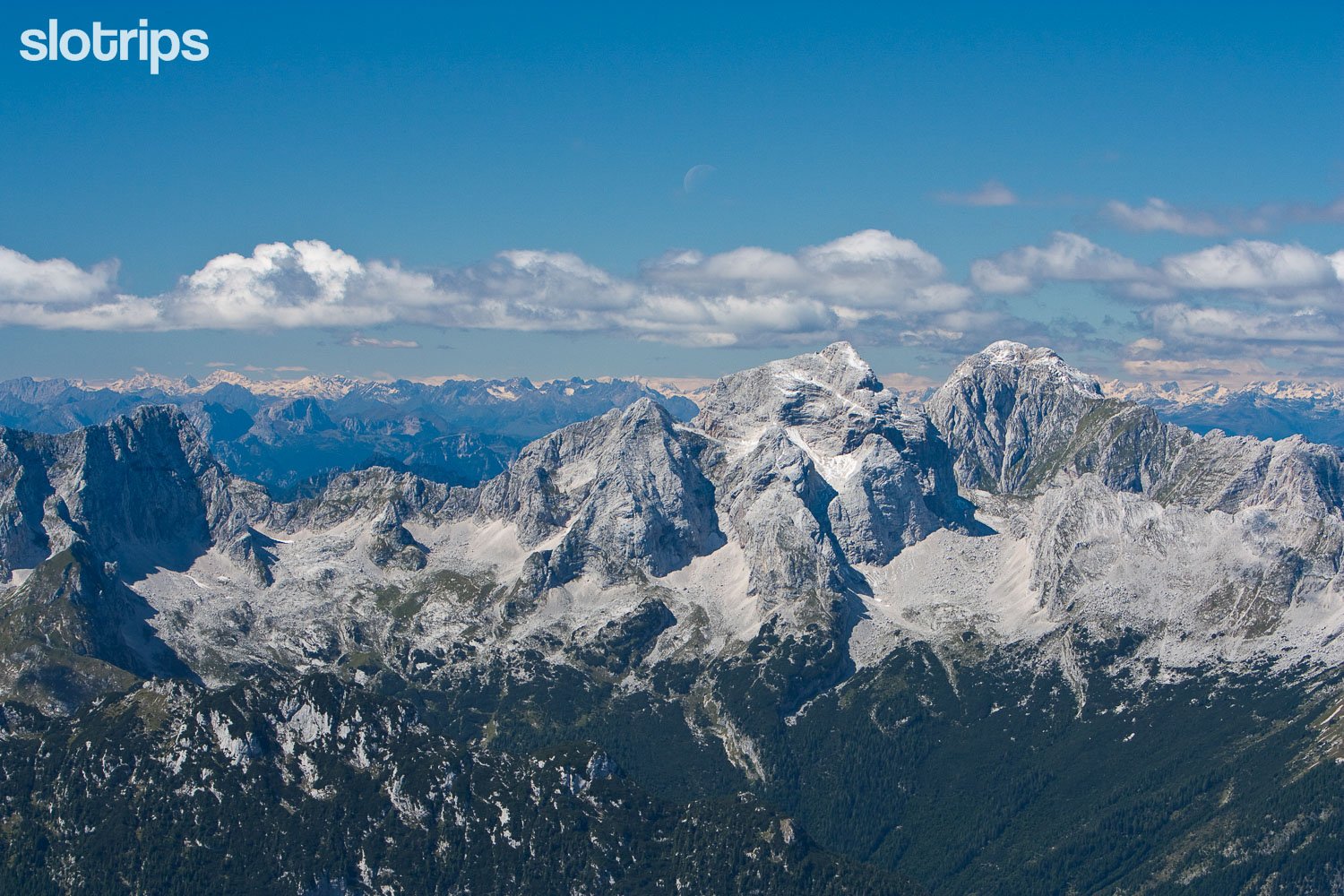
A wide, spectacular high-alpine panorama of the rugged, limestone peaks of the Julian Alps, captured during a Slotrips guided hut-to-hut trek in Triglav National Park, Slovenia.
Views of the Julian Alps from a hut-to-hut hike in the Triglav National Park

Alpe Adria Trail

This is our favorite long-distance trail. In the length of 750km it connects Austria, Slovenia, and Italy. Although it starts at the foot of the highest mountain in Austria and also crosses the Karawanks and the Julian Alps, it is not a high-alpine trail. It mostly follows stunning valleys and hills, offering amazing landscape changes. In Slovenia, you will hike across our highest road pass (Vršič) to the heavenly Soča Valley. Later it follows the history-ridden WWI paths and finally takes us to the wine-growing areas of Western Slovenia and Italy. It ends near the Italian town of Trieste at the Adriatic Sea.

OUR SUGGESTIONS:

3-day guided: Best of Alpe Adria Trail
4-day self-guided: Alpe Adria Trail Adventure

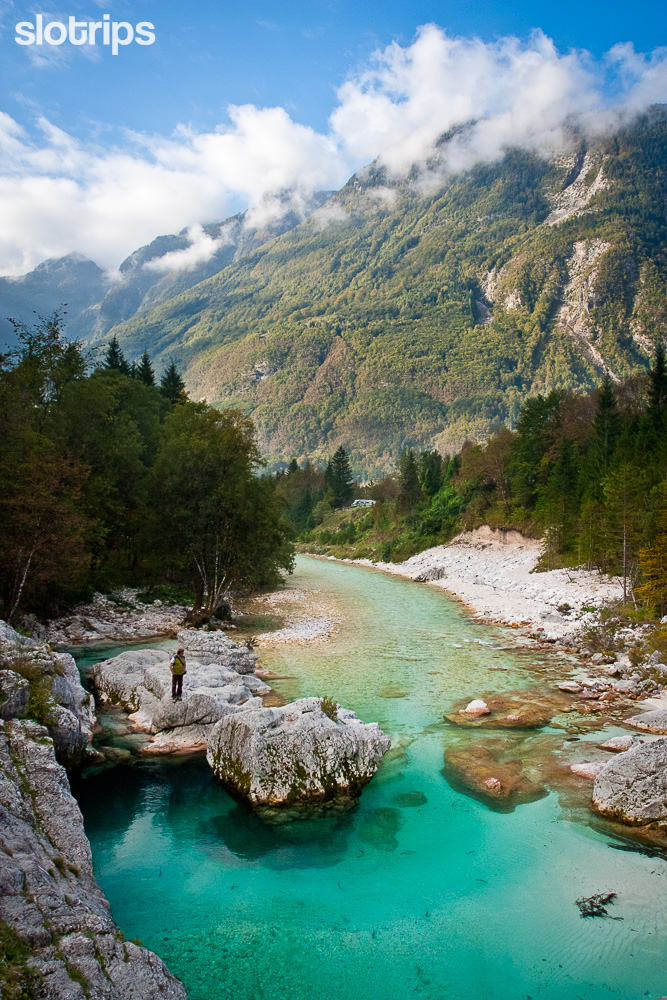
The pristine, emerald-green waters of the crystal-clear Soča River flowing between limestone rocks, a scenic highlight along the Alpe-Adria Trail during a Slotrips walking tour in Slovenia.
Hiker on the Alpe-Adria Trail by the Soča river
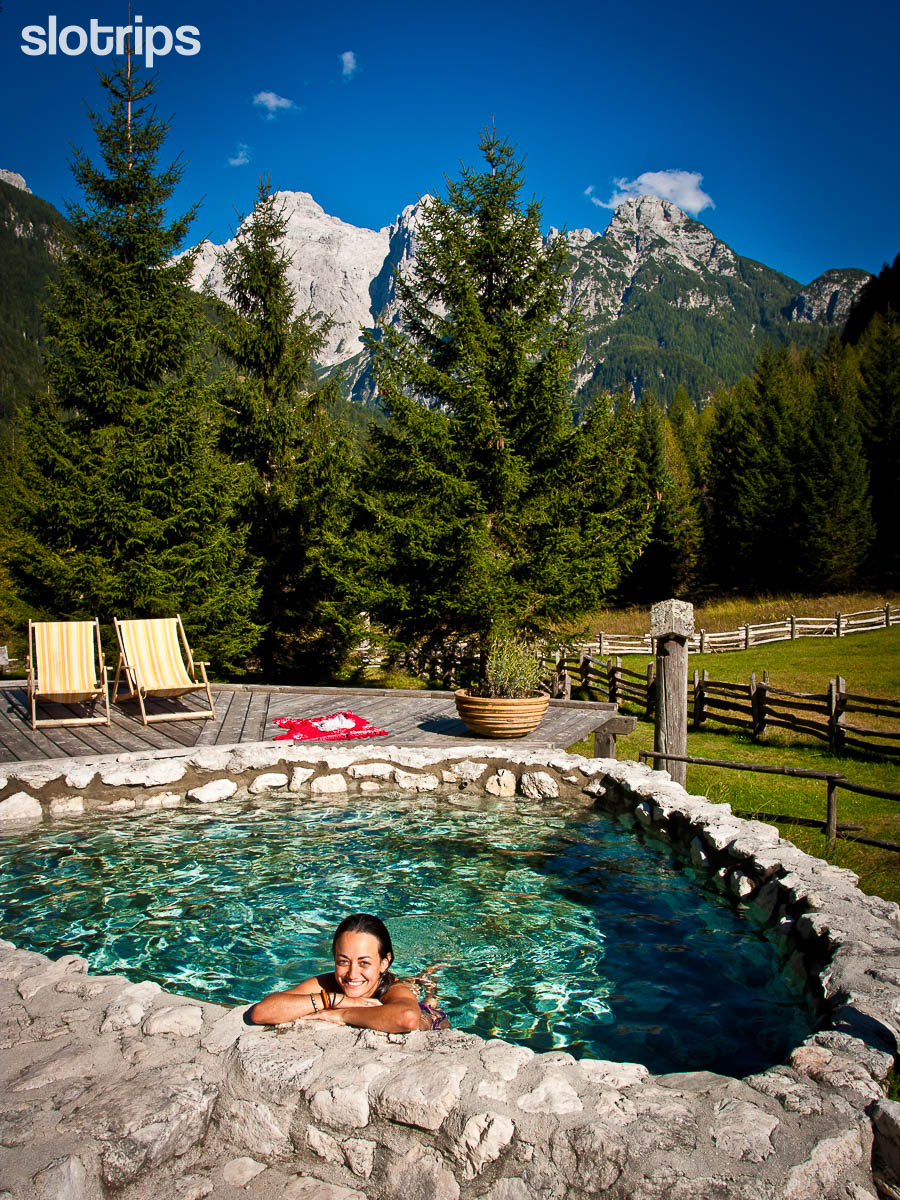
Enjoying relaxation at a scenic wellness stop on the Alpe-Adria Trail in Slovenia, a curated 'hidden gem' experience on a Slotrips tour.
Hidden gem on the Alpe-Adria Trail in Slovenia

Via Dinarica

The entire long-distance trail runs in the northwest-southeast line through the karstic area of the Western Balkans, crossing 6 countries from Slovenia to Albania. It is more than 1,200 kilometers long, with a 160km Slovenian section. Via DInarica in Slovenia is beautifully wild, but expect also several sections on asphalt & gravel roads through extensive forests. Have a look at this beautiful video.

Juliana Trail

This is a circular long-distance route that takes you around the Triglav National Park or the entire eastern Julian Alps. As one of the most exciting newly opened long-distance hiking trails, it got a lot of international media exposure. Here is our honest first-hand opinion about it.

OUR SUGGESTION:

8-day self-guided: Best of Alpe-Adria & Juliana Trail

Other long-distance hiking routes

Let’s not forget the Walk of Peace (following the WWI Soča front), Via Alpina (international purple & red routes crossing the Alps), or the European hiking routes E6 & E7 crossing most of Slovenia’s subalpine hills.

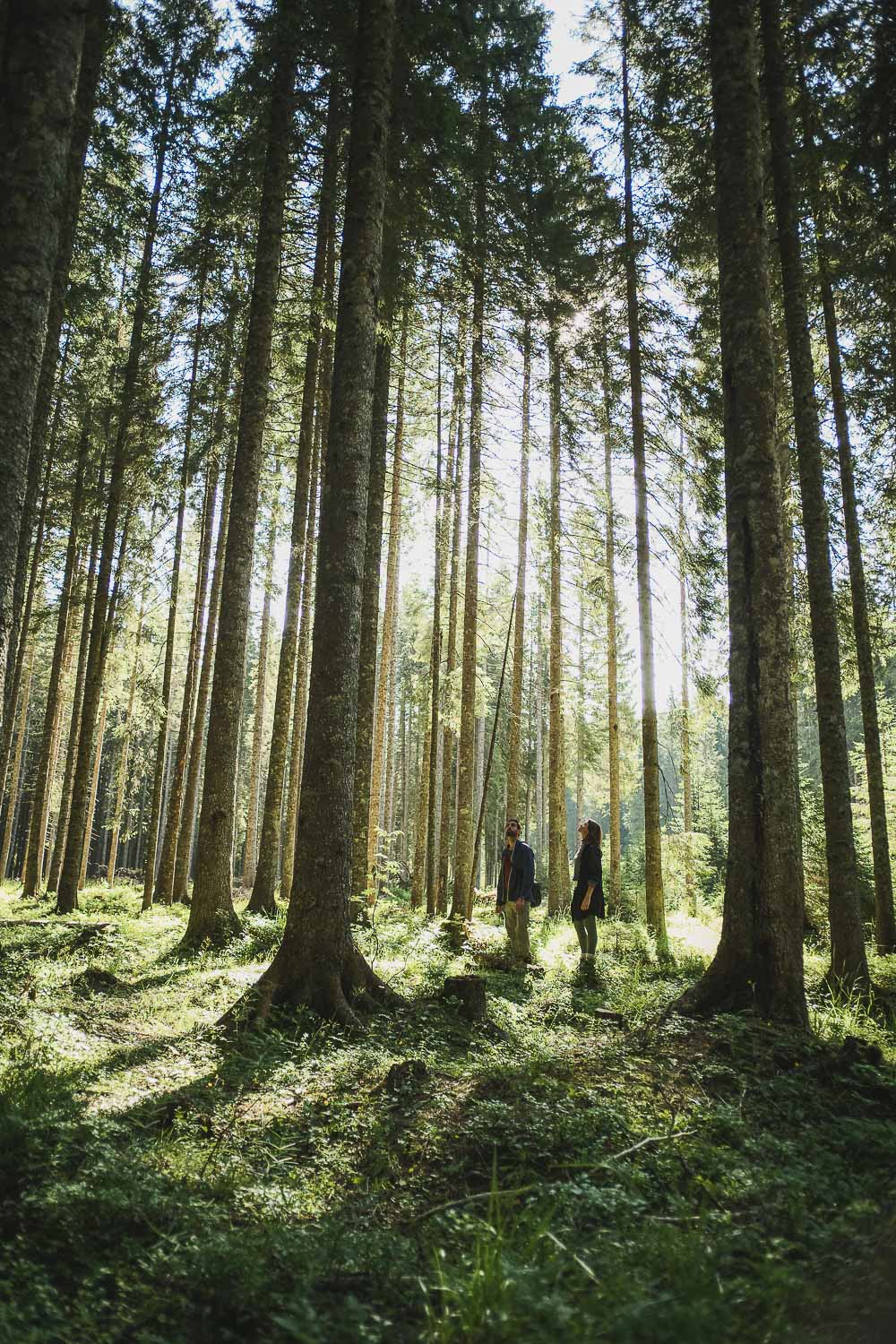
Tall, sun-dappled trees in the peaceful forests of the Pokljuka Plateau along the Juliana Trail, a common day hike route on Slotrips self-guided tours in Slovenia. (Photo: Ciril Jazbec / STO)
Forests of Pokljuka on the Juliana Trail (photo by: Ciril Jazbec for STO)
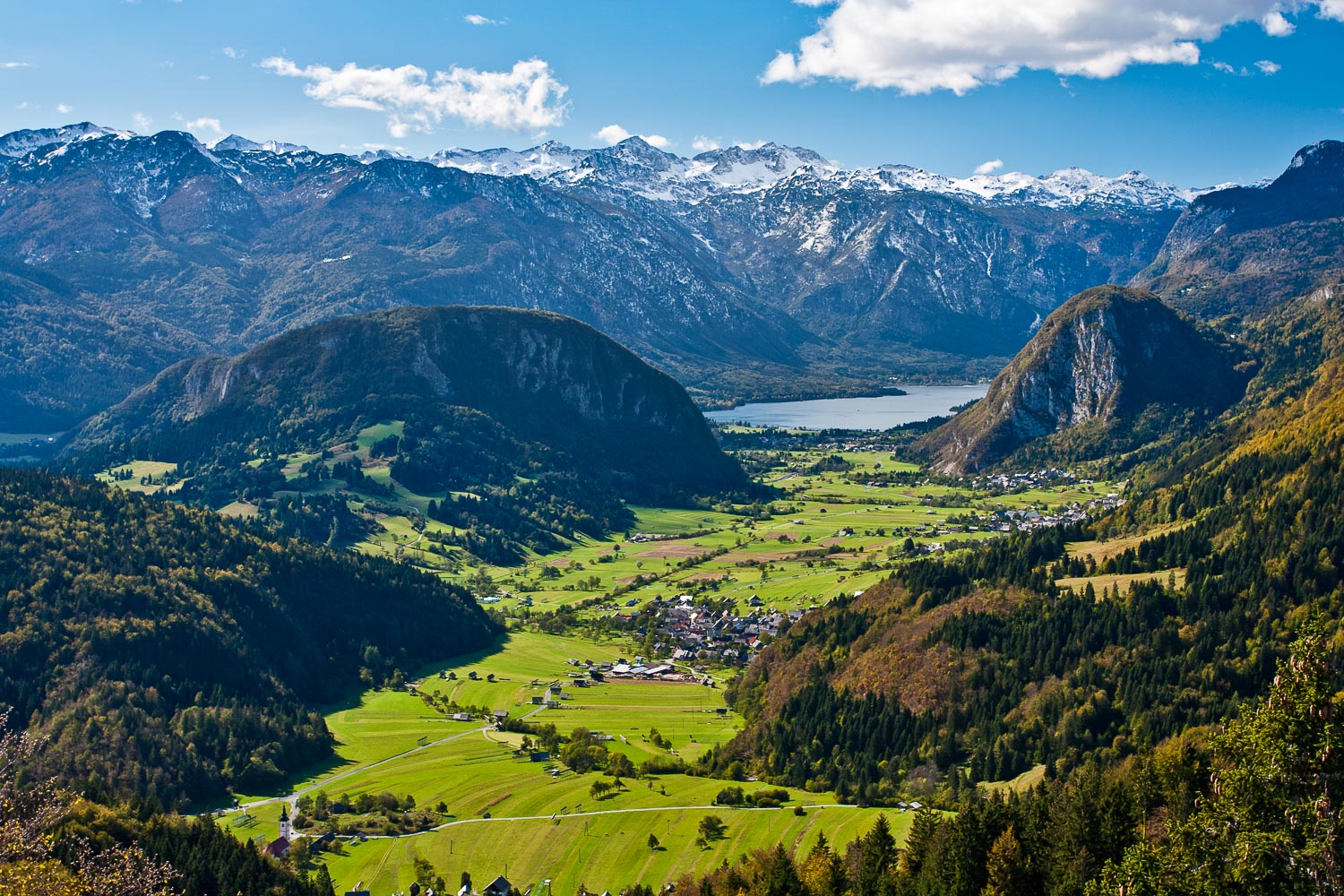
A wide panoramic valley view with clear, deep Lake Bohinj in the distance, surrounded by forested hills and the towering Julian Alps, as seen from a scenic viewpoint on the Juliana Trail in Triglav National Park, Slovenia.
View of Lake Bohinj on the Juliana Trail

Day hikes or multi-day hikes?

Are you in for a point-to-point hiking journey with daily accommodation changes? Or do you prefer settling down in a comfortable hotel for a couple of days doing day trips from your base? When you think about this, you are really deciding how sincerely you are willing to leave your comfort zone on your hiking trip.

What does a hut-to-hut hike in Slovenia bring?

  • An amazing hiking adventure away from it all!
  • Immersion in the pristine high-alpine landscape you can only reach on a multi-day hike.
  • Divine sunsets and sunrises.
  • Connection with your fellow hikers sharing stories in the mountain huts.
  • Basic overnight stays without showers. Sometimes only dormitories are available so get ready for some snoring.
  • Limited variety and selection of food and beverages.
  • No luggage transfer and heavier backpacks.
  • Get some ideas for your hut-to-hut hike in Slovenian Alps.

When you are on a stage hike with a planned itinerary, you will have to go on a hike in (almost) any weather. This is also why such hikes are a test in many ways: of your endurance, mental strength, and physical fitness. But the feeling of achievement and fulfillment is also much stronger after several days of hiking.

A comfortable hiking trip

On the other hand, if you like the idea of a continuous hiking journey but still don’t want to leave the comfort of a hotel and your private bathroom, we definitely recommend the Alpe-Adria, the Juliana Trail, or our Alpine Heights & Coastal Delights walking tour.

On these trips, you won’t hike in absolute wilderness & “away from it all”. Even though you are walking beautiful trails in pure nature, you are never too far from civilization. If you feel tired and can’t make it through the stage or if it is raining cats and dogs, you can take a bus or a taxi to your next hotel.

You also won’t hike at high altitudes and won’t climb Slovenia’s highest peaks. Instead, you will marvel at their white limestone walls from mountain passes, you will follow beautiful valleys & rivers, cross dense forests, and stop in typical Slovenian villages. 

We also love making these journeys multi-active and adding some cycling sections or stages wherever it makes sense.

Day hikes

Day hikes are a great option for everyone who doesn’t like constant packing and unpacking. You’ll have more time to relax, adapt to the weather uncertainties, and visit other local sights. But at least on some days, you will need a car or a driver-guide. For a week-long hiking trip in Slovenia, we recommend choosing two different regions. Our favorites are Lake Bohinj, the Logar Valley & the Soča Valley. Contact us for a customized hiking trip in Slovenia.

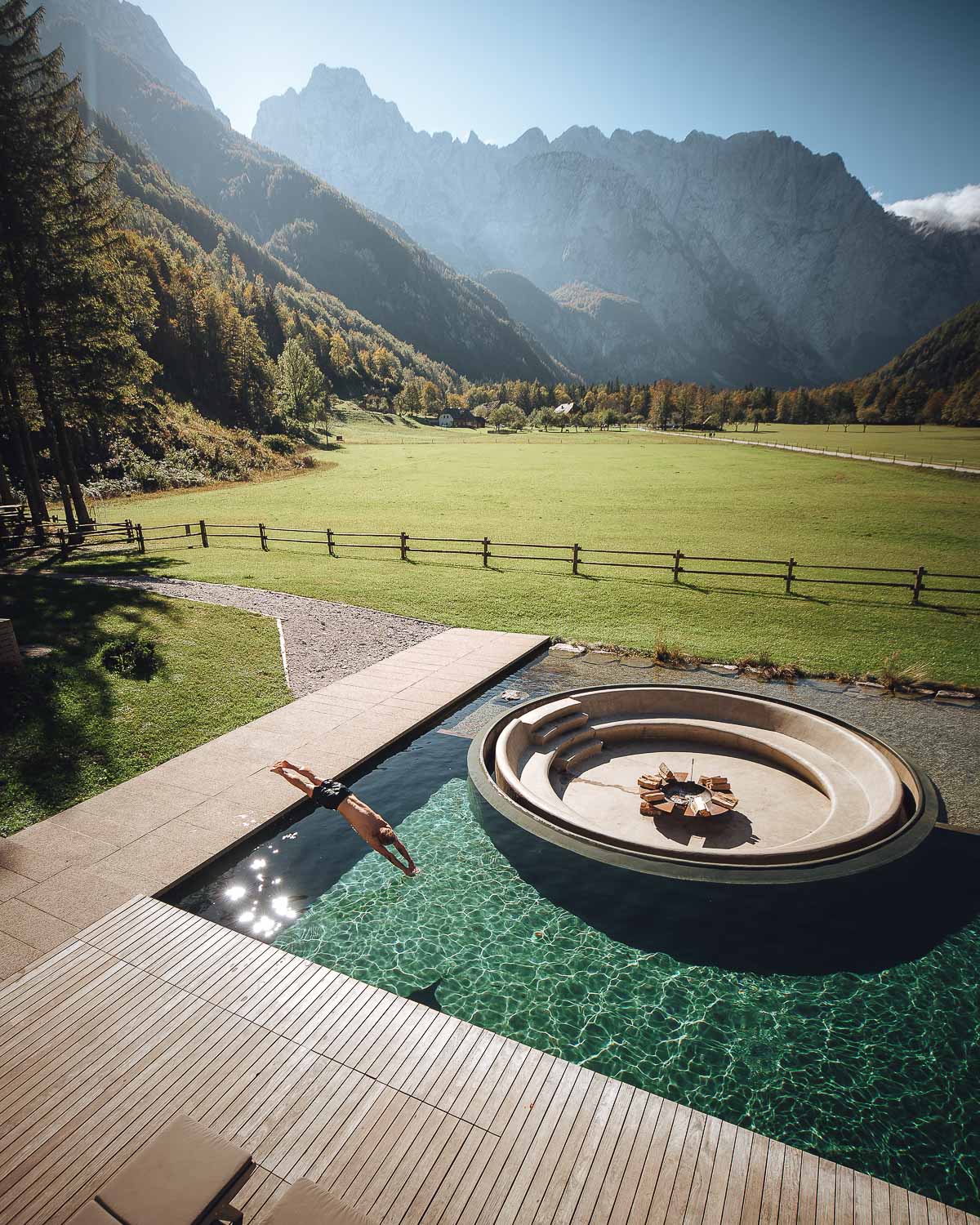
A modern outdoor pool with a unique circular fire pit, part of a premium eco-hotel overlooking the stunning Logar Valley, Slovenia, a location used for premium Slotrips tours. (Photo: Jacob Riglin / STO)
Hotel with a view in the Logar Valley (photo by: Jacob Riglin for STO)
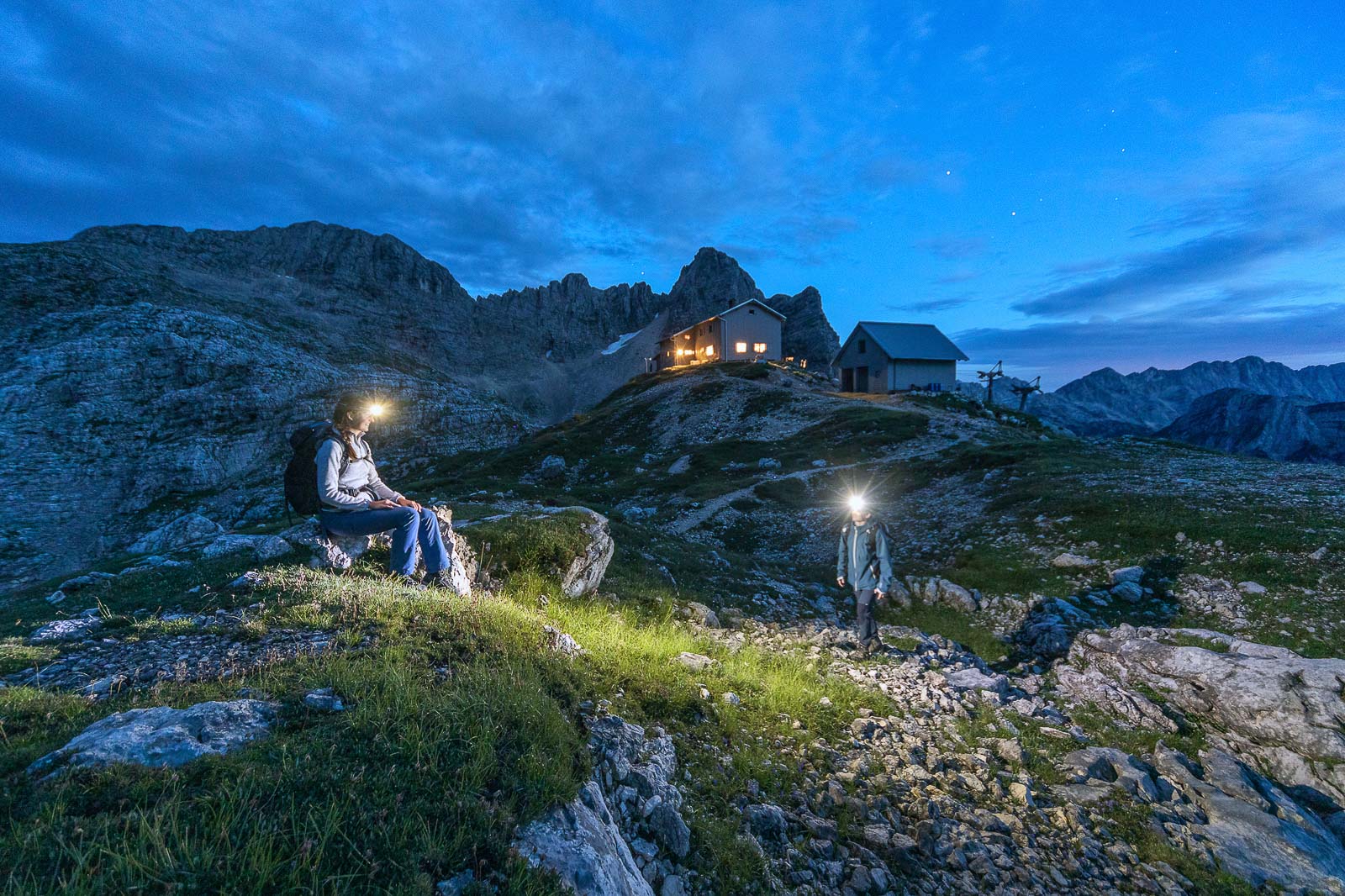
An intrepid hiker navigating a high-altitude rocky trail at night with a powerful headlamp, approaching a welcoming, lit mountain hut in the Julian Alps, Slovenia. (Photo: Jost Gantar / STO)
Mountain hut in the Julian Alps (photo by: Jošt Gantar for STO)

When to hike in Slovenia?

Our favorite months are May and June. It is warm, the days are long, nature is blooming, and it is still quite calm before the summer peak season kicks in.

However, if you are coming to Slovenia for a high alpine hut-to-hut hike, you will have to come between late June & September. That’s when most of the mountain huts are open and the snow has (mostly) melted.

For hiking in Slovenia’s wine regions, we recommend September, the time of harvest. October is another favorite with the change of colors all over the country & the golden larches in the Slovenian Alps.

Read more…

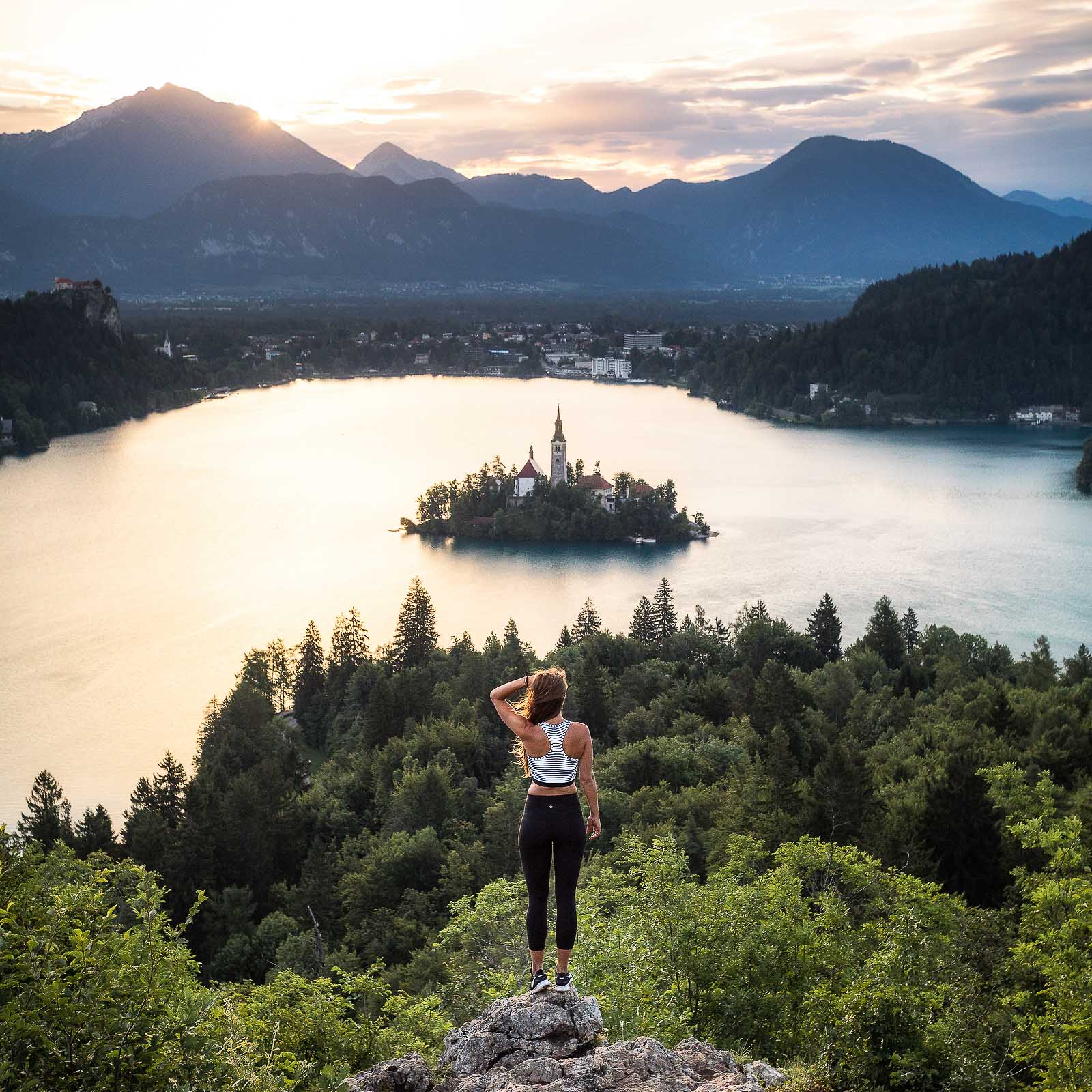
A female Slotrips hiker standing on a rock viewpoint overlooking the iconic Lake Bled island church and castle at golden hour sunrise in the Slovenian Julian Alps.
Sunrise hike at Lake Bled (photo by: Michael Matti for STO)

Flora & Fauna

Slovenes are traditionally closely connected with nature. We respect it and protect it! And we expect this from you as well. If you share the care of nature with us, you will surely enjoy it too!

In the mountains, for example, you might enjoy not even too shy looks of ibex, chamois, or a mouflon. A pair of eagles or marmots’ cheerful whistles. Maybe a close encounter with a snake, a snow hen, a wild rooster, a rabbit, or a roe deer. The latter is especially easy to see below the tree line, where there is no shortage of foxes and weasels.

In extensive forests of southern Slovenia lives a large population of brown bears. Individual specimens sometimes travel also north and west. But don’t worry – there have been no reports of foreign mountaineers meeting them for decades. The same goes for other big beasts. Your chances of winning a lottery are higher than your chances of meeting a wolf or a lynx in Slovenia.

In hotter summer months also expect insects. Not necessarily only the annoying ones, we also have about 3,600 species of butterflies.

The flower fields

When you hike through the country, you will quickly notice the two biggest features when it comes to vegetation. The first is definitely lush forests. Slovenia is the third most forested country in Europe. Another feature is the diversity of meadow and mountain flowers. If you are there at the right time (early summer) you will hike among carpets of various flowers, many of which are protected. Don’t pick them! Smell & enjoy them!

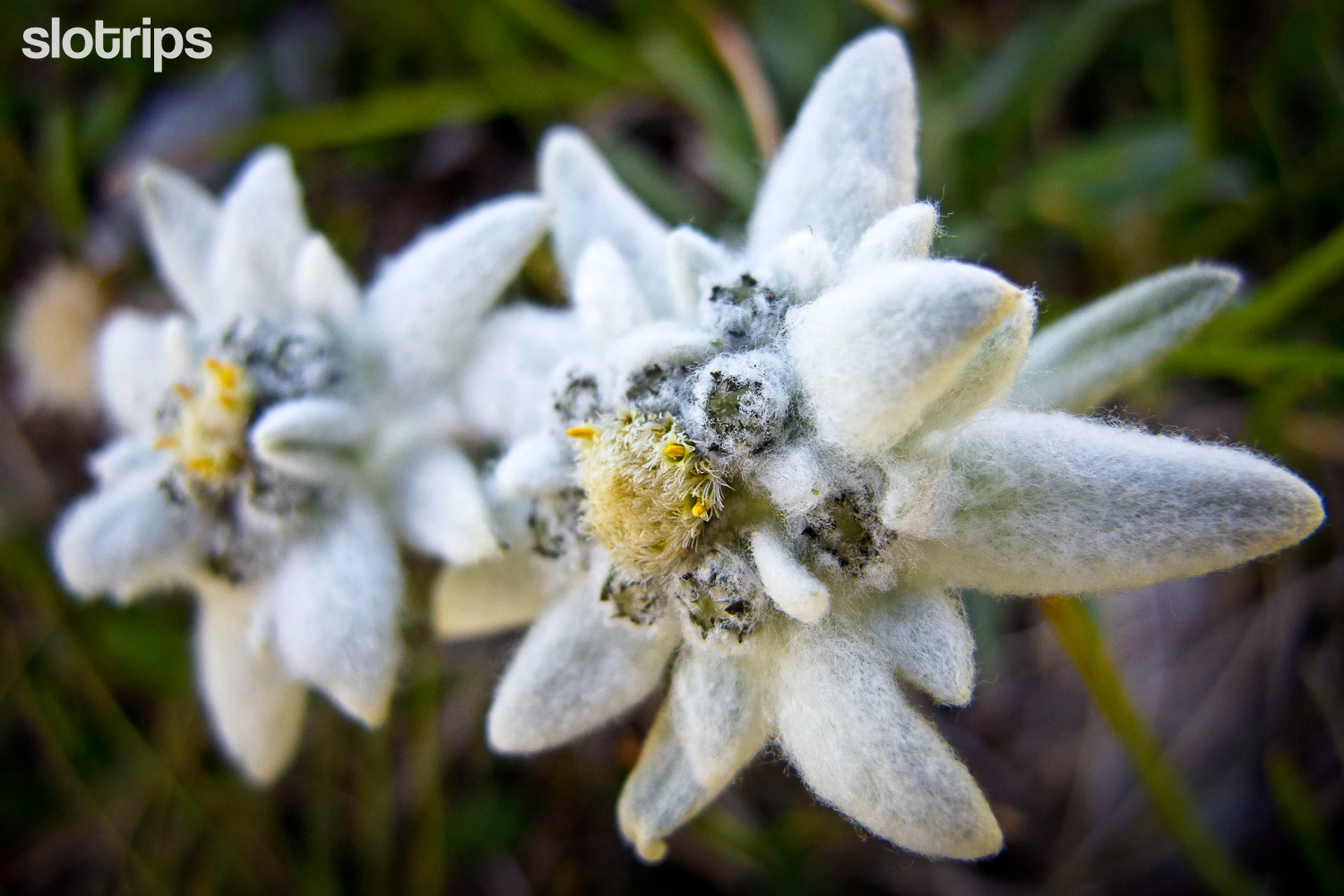
A detailed macro close-up of fuzzy, white Edelweiss alpine flowers growing in rocky terrain in the Julian Alps, Slovenia, often spotted on high-altitude Slotrips treks.
Edelweiss flower in the Julian Alps
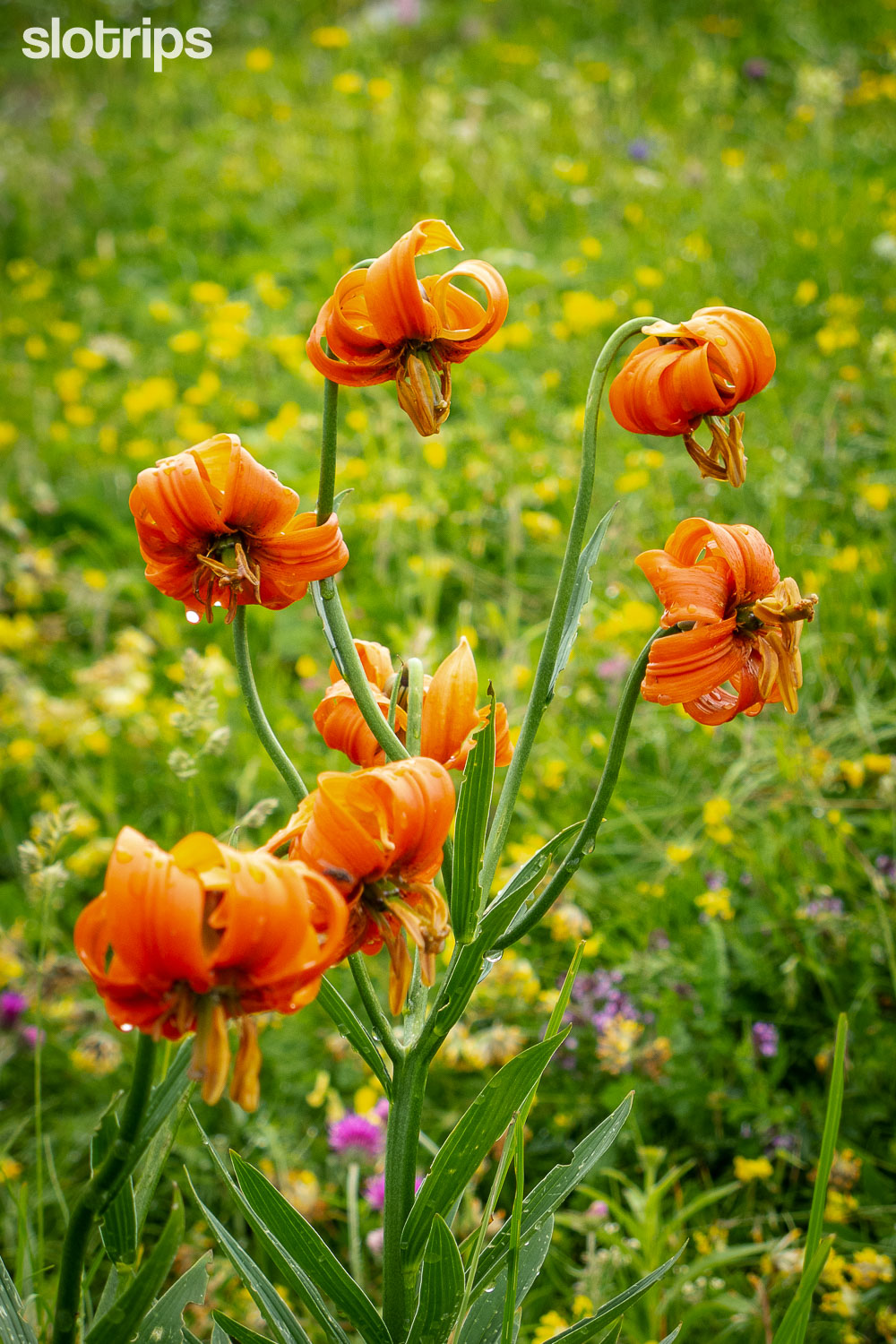
Vibrant orange Carniolan lily wildflowers nodding in a grassy high-altitude field within Triglav National Park, a scenic highlight on Slotrips botany walking tours.
Carniolan lily in the Triglav National Park

Safety

According to the Global Peace Report 2021, Slovenia is among the 10 safest countries in the world. Petty theft surely does occur and normal precaution is advised. There have also been occasional reports of car burglaries at some hiking trailheads. You should not leave things in a visible place in your car and your diamond rings should stay at home. 

The real safety issues during your hike in Slovenia are possible injuries and weather conditions. You should be well prepared & equipped for the hike you are doing, especially on a hut-to-hut hiking trip. In the mountains, phone coverage is not always available and the weather can change quickly. 

Even though the Slovene mountain rescue service is considered one of the best in Europe, don’t push your luck & stay on the safe side! Make sure to get yourself adequate insurance too.

Last but not least: ticks are common, and they can transmit tick-borne encephalitis & Lyme disease. No need to be paranoid but do apply tick repellant!

BEFORE YOU GO: check this website by Alpine Association of Slovenia.

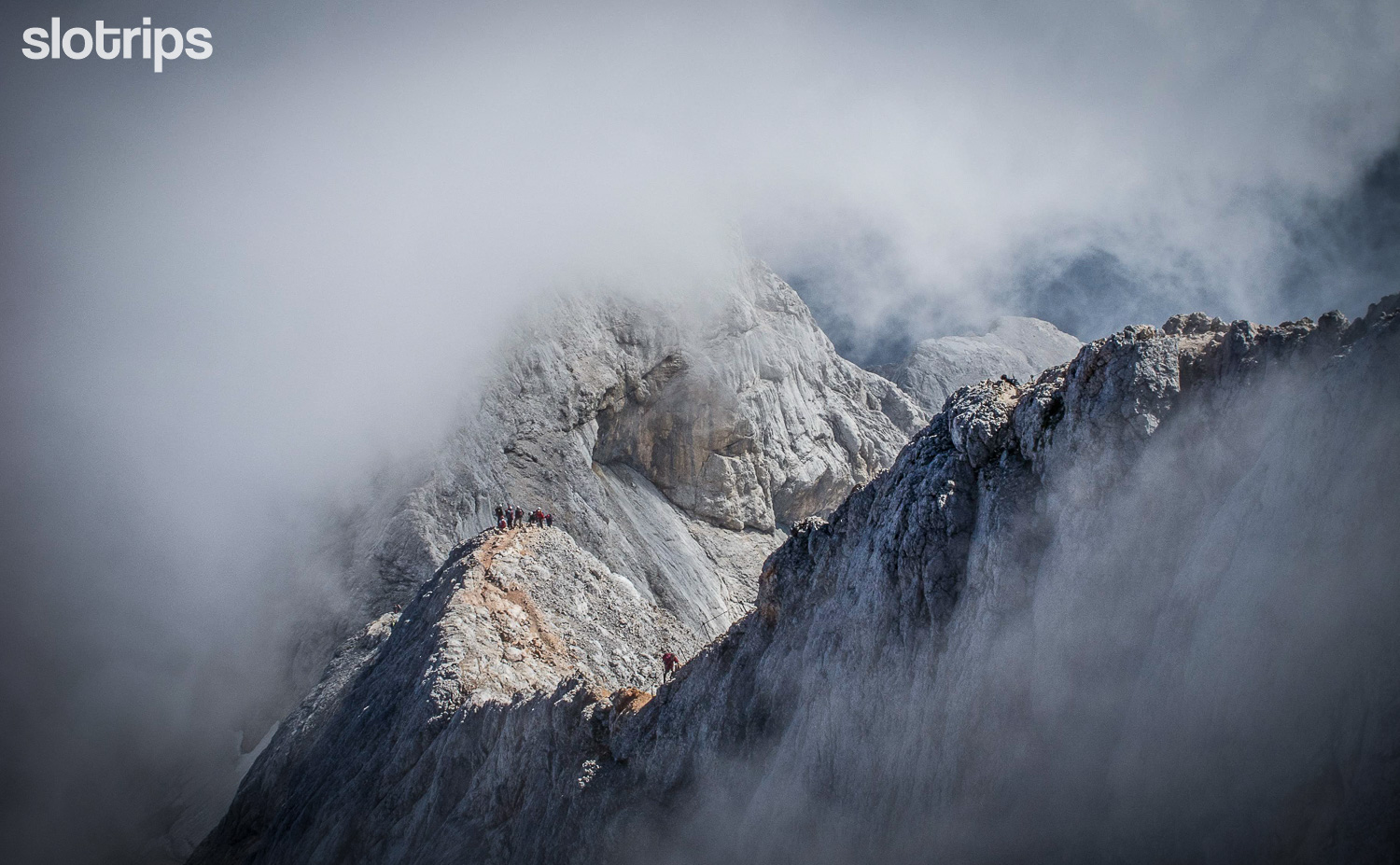
A small group of intrepid Slotrips hikers carefully navigating a sharp, highly exposed rocky summit ridge on Mt. Triglav, shrouded in dramatic mountain fog and clouds in the Slovenian Julian Alps.
Hikers on the summit ridge on Mt. Triglav

Information & Maps

To hike in Slovenia, you will need a good map. Sidarta’s 1:25.000 hiking maps of Slovenia are the best and cover most of Slovenia’s high alpine terrain. On the other hand, the maps of the Alpine Association of Slovenia cover lots of other regions too.

Your favorite hiking app (AllTrails, Gaia GPS, OutdoorActive, etc.) surely has an abundance of different trails, tracks, and maps! They are definitely super useful  – if you know how to use them and if your phone doesn’t run out of battery. We too, use a customizable navigation app for planning your self-guided hiking trips in Slovenia. It makes your navigation and orientation so much easier.

Slovenian local tourist offices are a great source of information about the region or their micro-location. When you are already on your way, or when in doubt, ask the locals for directions or advice. Slovenes are usually very willing to help a foreign guest and English is widely spoken. In the mountains, the hut keepers are also a very good source of information, and you can almost certainly buy a map of the area in the hut.

Here are some useful links:

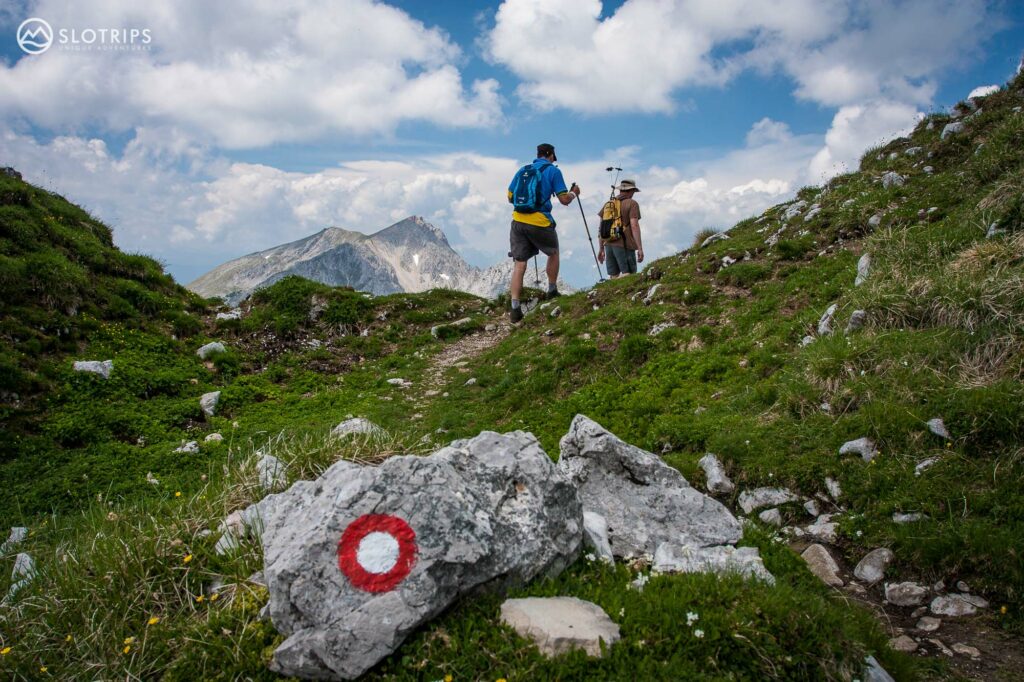
A detailed foreground shot of a traditional Slovenian Knafelc trail waymark—a red circle with a white center painted on a rock—with Slotrips hikers following a grassy path towards mountains in the background.
Slovenian "Knafelc" waymark

Local Tips & Tricks

Knafelc waymark

When you buy a hiking map in Slovenia, you will see a spiderweb of red lines. These are the official hiking trails (by the Alpine Association of Slovenia) and most of them are nicely marked with our “Knafelc” waymark – red & white circle on the picture above. Besides the official hiking trails every region & municipality has developed local hiking trails, often marked with yellow signposts and numbers, corresponding with the local tourist maps.

Dober Dan!

On the trails in hills it is customary to greet the fellow hikers, even if we don’t know each other. “Dober dan” (good day), “živjo” (hello), “hvala” (thank you), or “prosim” (please) will take you a long way! As a small nation, we really appreciate it if a foreigner makes an effort and learns a couple of words. This small gesture will open doors for you and you will surely make new friends.

The Underfoot

The trails in Slovenian mountains are rocky. They can be narrow, steep, you can expect loose gravel, slippery roots, or tree leaves. The hiking poles help, so consider taking them with you. Also, don’t forget sturdy & comfortable hiking shoes with good grip. How about flip-flops? Not for the trails, but you might find them handy to rest your feet at the end of the day and use them in & around the hut on your multi-stage hike.

Water

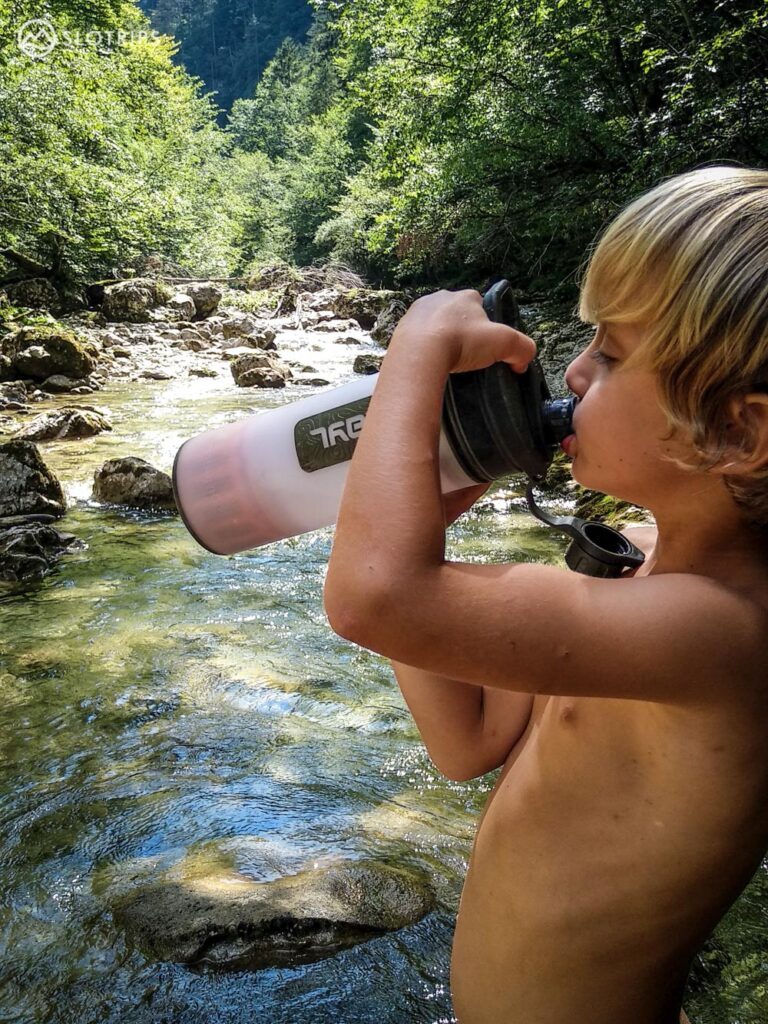
Water in Slovenia is abundant and of the highest quality. You can drink tap water all over Slovenia, but we do recommend some caution when drinking from an open stream during your hikes. If you see a water source or a water trough, it is most probably safe to drink. However, if you would like to stay on the safe side, bring your favorite water filter (we love Grayl) and you will never buy bottled water again! Say no to single-use plastic!

Keep in mind: hut-to-hut hikes are a different story. There is very little surface water in the high-alpine areas and you will probably have to buy bottled water every now or then at the mountain huts.

Food

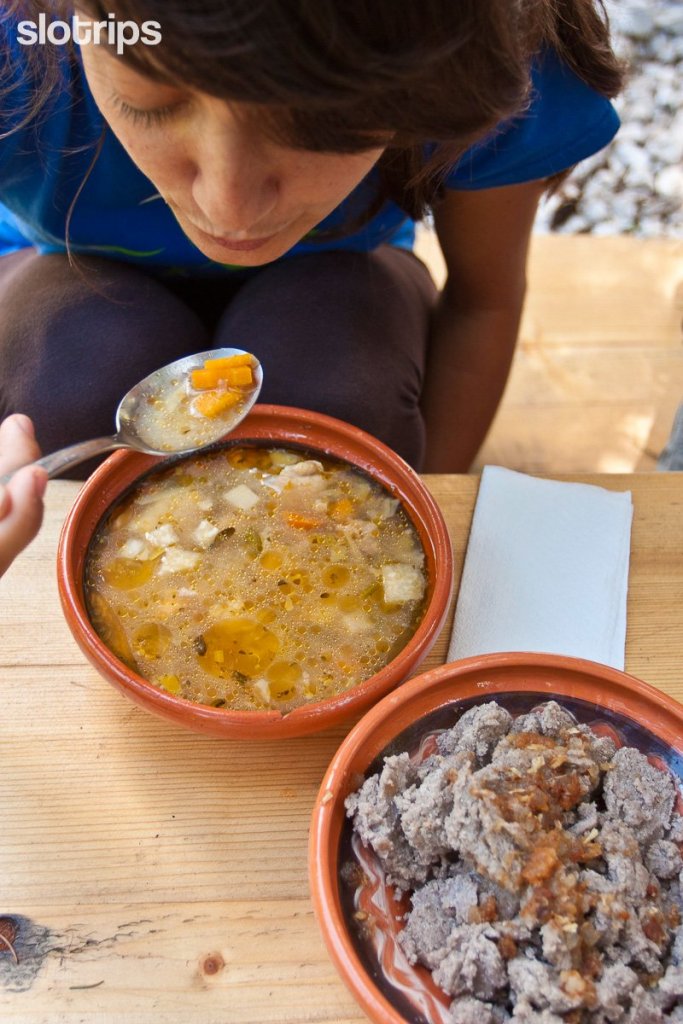
Slovenian food is amazing! In many places, you will get delicious farm-to-fork dishes, prepared with love and secrets of our grandmas’ recipes. The food in the mountain huts is mostly traditional, with dishes “on spoon” (= stews), as we say it. However, in most of the huts that are not accessible by car, do not expect any culinary highlights. After a couple of days in the huts, you will be happy to have a proper “restaurant meal”.
Hearty Slovenian mountain food served in clay bowls at an alpine hut—likely Jota (rich vegetable stew) and Ajdovi Žganci (buckwheat mush with cracklings)—as tasted on a Slotrips multi-day trek.

Traditional Slovenian mountain food
A young boy drinking fresh water from a specialized filter bottle next to a crystal-clear, rocky forest stream during a Slotrips family outdoor adventure tour in Slovenia.
Filtering water from a stream

Hiking Slovenia Responsibly

A big part of the Slovene mountain territory is protected. Either as a part of the Triglav National Park or of Natura 2000 (the European network of special protected areas), or as a local landscape park. You will be hiking in a clean country! Also in larger cities, even more so in the mountains. Make sure it stays that way. The rule in huts has always been that whatever you bring with you, you also take back to the valley.

We guard our trails, we guard our waters, we guard our flora and fauna. To keep the nature intact, you will hear many “don’ts”: don’t walk outside the trails, don’t pick the flowers, don’t upset the animals, don’t fly your drones, don’t swim in the high alpine lakes, don’t wild camp and do respect private property.

Respect the house rules in the huts, their caretakers and the crew. Embark on trails you can handle mentally and physically. Always take enough fluids and energy snacks with us.

Enjoy it!

TAKE NOTHING, BUT MEMORIES! LEAVE NOTHING, BUT FOOTPRINTS!

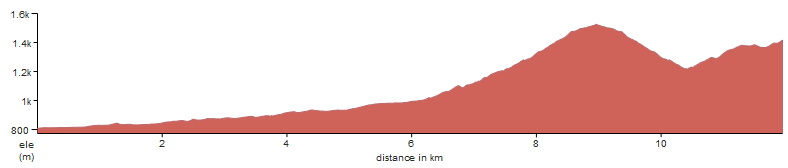
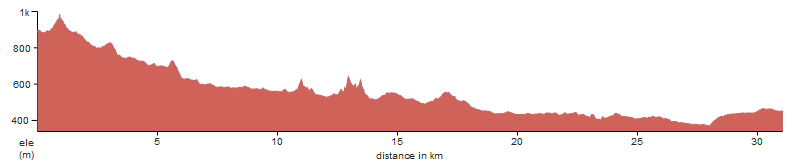
An elevation profile of 3 day Alpe-Adria trail, between Kranjska Gora and Tonkina koca
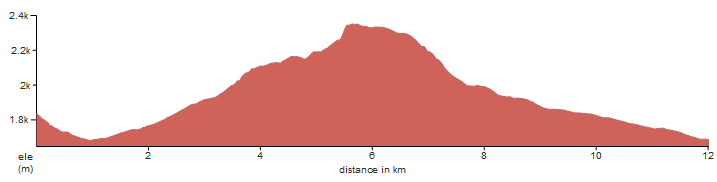
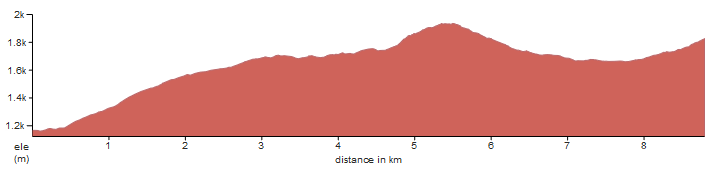
An elevation profile of 3 day Alpe-Adria trail, between Tonkina koca and Kekec Homestead
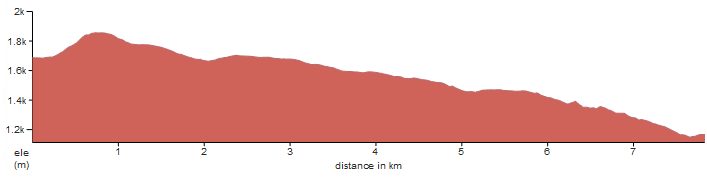
An elevation profile of 3 day Alpe-Adria trail, between Kekec Homestead and the town of Bovec

Prefer email? tours@slotrips.si

Thank you for your message!
Our team will get back to you within 24h from Monday to Friday.